

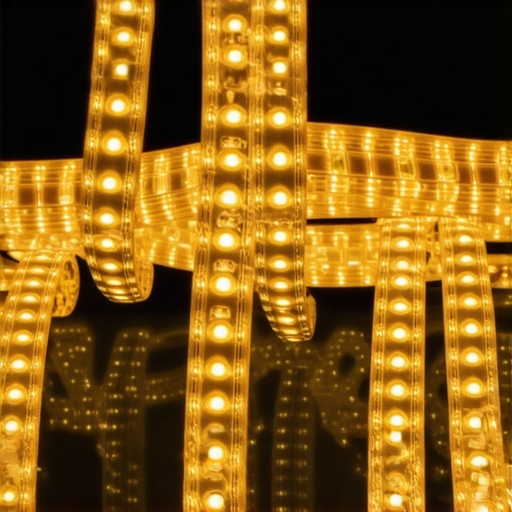
Elevating Home Theater Environments with Advanced Backlighting Techniques
In the realm of immersive home entertainment, the nuanced deployment of backlight and ambient lighting has transitioned from mere aesthetic enhancement to a critical component that influences viewer perception and visual comfort. As technical complexities evolve, understanding the interplay of LED strip lighting configurations, color calibration, and synchronization becomes paramount for both enthusiasts and industry professionals.
Strategic Integration of Ambient Lighting to Optimize Visual Fidelity
Advanced ambient illumination serves to mitigate contrast imbalances and reduce eye strain, especially when viewing 4K and 8K Ultra HD content. It involves meticulously calibrated bias lights that complement display technologies, whether OLED or LED panels. Notably, expert guides recommend employing diffuse LED strips placed strategically around the perimeter of the viewing area to circumvent hot spots and light bleed, which can compromise the visual integrity of the cinematic experience.
Advanced Considerations in LED Strip Compatibility and Synchronization
One of the enduring challenges in modern home theater setups revolves around mixing LED strip brands to achieve seamless synchronization with display refresh rates, especially with emerging 2026 standards. The question arises: Can different LED strip brands be reliably integrated without causing sync lag or color mismatch? From a technical perspective, compatibility hinges on the control protocols and power supply consistency across brands. Research emphasizes adherence to open standards such as DMX512 or PROTOCOL-specific integrations, utilizing high-precision controllers capable of managing multi-brand setups. Proper calibration and employing installation techniques tailored for multi-brand configurations are essential to maintain color accuracy and response times.
Expert-Level Calibration and Synchronization for Future-Ready Home Theaters
As the industry advances towards ultra-fast response times and higher dynamic ranges, ensuring precise calibration becomes essential. Techniques such as local dimming control, color temperature adjustments, and real-time sync testing are imperative for preventing issues like ghosting, flickering, or latency. Into this landscape enters the debate on whether mixing LED strip brands might inherently introduce latency or compromise visual harmony. Evidence suggests that with sophisticated controllers and adherence to calibration routines, brand divergence need not hinder the ultimate immersive experience.
What are the most effective ways to ensure compatibility between diverse LED strip brands in a synchronized multi-strip setup for 2026 standards?
Achieving synergy in a multi-brand LED setup relies on robust hardware, comprehensive calibration, and adherence to industry protocols. Consider integrating high-capacity controllers capable of aggregate data processing and employing software-based calibration tools. Regularly referencing authoritative resources like the lighting configuration manuals ensures optimal performance and future-proof compatibility. For nuanced insights, fans and professionals are encouraged to contribute their field-tested experiences on dedicated forums or through consultation with lighting specialists.
If you’re exploring the cutting edge of home theater lighting configurations, delve into our comprehensive expert articles and share your insights with the lighting community to push the boundaries of immersive entertainment.
Transforming Viewing Spaces with Creative Bias Lighting Strategies
Innovative bias lighting doesn’t merely serve as a background glow; it acts as a pivotal element in elevating the cinematic experience by reducing contrast strain and creating a seamless visual transition between screen and environment. Expert techniques involve layering different lighting zones, including perimeter LEDs and indirect lighting, to craft a balanced ambiance that complements high dynamic range content. For instance, employing bias lights designed for 2025 standards can significantly enhance contrast handling, especially in rooms aiming for near-precision calibration.
Beyond Basic Setup: The Art of Strategically Calibrated Bias Illumination
Advanced calibration involves dynamically adjusting color temperature and luminance levels based on content type and ambient lighting conditions. The advent of intelligent controllers with adaptive algorithms allows for real-time modifications, ensuring the bias lighting subtly shifts to match scene brightness and color palette. This technique minimizes eye fatigue during extended viewing sessions and enhances perceived contrast without overwhelming the viewer. To maximize these benefits, it’s crucial to leverage expert installation and calibration tips tailored for hybrid setups combining multiple lighting effects.
How can emerging AI-powered calibration tools revolutionize bias lighting customization for future home theaters?
Integrating AI-driven calibration solutions offers the potential to fine-tune bias lighting with unprecedented precision, adapting instantly to content dynamics and user preferences. By analyzing real-time video signals, AI algorithms could automatically optimize hue and intensity, ensuring perfect harmony between lighting and display. This evolution echoes the industry shift towards smarter, more intuitive lighting ecosystems. An authoritative resource on this trajectory is highlighted in recent comprehensive guides that explore future-proofing setups for 2026 and beyond.
If you’re eager to stay at the forefront of immersive home theater technology, consider exploring our detailed expert support options or joining professional communities dedicated to high-end lighting design.
Harmonizing Diverse LED Ecosystems for Flawless Visual Sync
As high-end home theaters evolve into complex ecosystems, integrating multiple LED strip brands to create a cohesive ambient experience presents unique technical challenges. The crux lies in ensuring seamless color matching and synchronization across various control protocols and hardware architectures. To address this, professionals advocate for employing universal control interfaces—most notably, open standards like DMX512 and Art-Net—that facilitate cross-brand compatibility while offering granular control and real-time adjustment capabilities.
Implementing high-performance controllers capable of managing multi-protocol inputs can significantly reduce latency and prevent color mismatches. For instance, using devices such as the Enttec DMX Ethernet interface allows for synchronized control over disparate lighting systems through networked environments, ensuring harmony in visual output even in complex multi-brand deployments.
How can adaptive calibration protocols compensate for inherent hardware variances?
Adaptive calibration techniques employ iterative measurement and feedback algorithms—powered by spectrophotometers and colorimeters—to fine-tune each LED strip’s output. These systems account for manufacturing tolerances, age-related color shifts, and environmental factors, recalibrating on-demand to maintain a cohesive visual palette. Coupling these with machine learning algorithms can further automate the process, dynamically adjusting parameters for optimal synchronization during prolonged viewing sessions. Industry leaders like Photonics Online emphasize the importance of such intelligent systems for future-proof setups.
For enthusiasts aiming to future-proof their installations, investing in controllers supporting firmware upgrades and compatibility with emerging standards is crucial. Regularly consulting authoritative sources and participating in professional forums—like the Home Theater Lighting Community— ensures access to cutting-edge techniques and software updates that maintain system integrity amidst technological shifts.
Innovating Beyond the Conventional: AI-Driven Multi-Brand Calibration and Control
Looking ahead, artificial intelligence promises to revolutionize multi-brand LED synchronization with autonomous calibration and content-aware adjustments. AI-powered systems can analyze video signals in real-time, detecting scene changes, dominant colors, and brightness levels, then dynamically adjusting LED outputs to elevate immersion. The deployment of such intelligent ecosystems necessitates not only hardware capable of complex data processing but also robust software frameworks that interpret and react to diverse control signals seamlessly.
This entails developing modular control architectures that integrate AI modules with existing lighting controllers, fostering an environment where upgrades or brand changes do not compromise synchronization or color fidelity. Major industry players like Prnewswire highlight ongoing innovations in this domain, emphasizing future-readiness and adaptability.
To truly harness the potential of these advancements, professionals and enthusiasts should focus on selecting scalable, open-platform controllers, and stay engaged with ongoing research within the AI and lighting integration communities. Continuous learning and experimentation will be essential as technology progressively converges toward fully autonomous, synchronized multi-brand lighting ecosystems that redefine home theater immersion.
Unlocking the Secrets to Flawless Multi-Brand LED Ecosystems
In the pursuit of pristine visual harmony within sophisticated home theater setups, the integration of diverse LED strip brands presents a formidable challenge—one that demands an intricate balance of hardware compatibility, control precision, and calibration finesse. For professionals aiming to craft seamless ambient environments, comprehending the nuances of cross-brand synchronization is essential. Modern controllers equipped with adaptive algorithms and support for open standards like Art-Net or sACN can significantly mitigate disparities caused by manufacturer-specific protocols, ensuring uniformity in color rendering and response times. Moreover, strategic network topology design, employing switch-managed Ethernet hubs, facilitates stable data flow critical for real-time adjustments, thereby elevating the immersive experience to unprecedented levels.
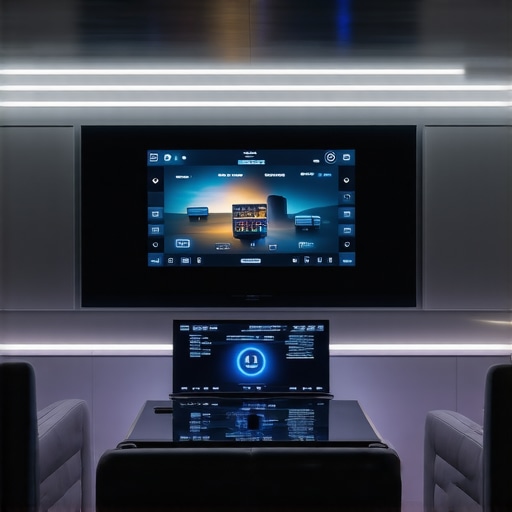
How can integrating machine learning algorithms refine multi-brand LED synchronization amidst hardware variances?
Advanced algorithms leveraging machine learning can analyze real-time color and luminance discrepancies across various LED strips, dynamically calibrating outputs to achieve visual congruence. By continuously learning from environmental factors and hardware aging, these systems enable adaptive corrections that maintain harmony without manual intervention. This proactive approach not only enhances fidelity but also extends component lifespan—a crucial consideration for high-end installations. Industry pioneers like Photonics Online emphasize deploying these intelligent solutions to future-proof complex lighting ecosystems.
Elevate Your Calibration Routine with Sophisticated Visual Metrics
Moving beyond traditional manual calibration, employing high-precision spectrophotometers and colorimeters capable of measuring delta E deviations offers a quantitative foundation for calibration refinement. Integrating these tools within automated calibration routines ensures each LED segment conforms meticulously to specified color temperature targets, accounting for environmental influences such as room reflectance and ambient light. Furthermore, contemporary software platforms provide comprehensive dashboards that track calibration history, highlight drift trends, and suggest corrective actions—vital for maintaining consistency over the lifecycle of a high-fidelity home theater system.
Can real-time feedback mechanisms revolutionize bias lighting in dynamic viewing conditions?
Implementing real-time feedback systems, utilizing sensors to monitor ambient light levels and viewer gaze patterns, can enable adaptive bias lighting that adjusts luminance and hue on-the-fly. This responsiveness minimizes eye strain during extended sessions and enhances contrast perception—especially when watching HDR content. Such innovations, powered by edge computing and AI, herald a new era of hyper-personalized viewing environments, where lighting responds intuitively to content and viewer comfort. Industry reports from Lighting Industry Journal suggest these technologies are on the cusp of mainstream adoption, promising unprecedented immersive quality.
Integrating Vision-Based Calibration for Ultimate Synchronization
Emerging techniques involve employing camera-based systems that analyze the spatial and chromatic coherence of the entire setup, providing a holistic calibration approach. Distributed optical sensors or high-resolution cameras capture the spectrum and spatial distribution of ambient light, feeding data into algorithms that fine-tune LED outputs with exceptional precision. This vision-based calibration paradigm compensates for subtle discrepancies induced by environmental variables and hardware variances, guaranteeing synchronized, high-fidelity visuals. For practitioners seeking cutting-edge solutions, referencing detailed methodologies outlined by AVS Forum can be profoundly insightful.
What role will augmented reality play in future calibration and customization processes?
Augmented reality (AR) technology promises to revolutionize calibration workflows by providing immersive, real-time visual guides superimposed onto the physical environment. Professionals and enthusiasts could use AR glasses or apps to identify calibration targets, visualize ideal lighting zones, and receive instant feedback on adjustments, dramatically reducing setup time and increasing precision. This integration of digital overlays with physical calibration routines enhances accuracy and accessibility, democratizing high-end calibration capabilities. Staying ahead in this domain requires engaging with innovative AR development platforms and authoritative sources like AR for Lighting, which explore practical applications and emerging standards.
Expert Insights & Advanced Considerations
Adaptive Calibration Will Define the Next Era of Home Cinema
As display technologies evolve towards higher dynamic ranges, the importance of real-time adaptive calibration becomes paramount. Precision in backlighting not only enhances visual contrast but also minimizes fatigue, leading to a seamless immersive experience. Embracing AI-driven tools and machine learning algorithms offers a proactive approach to maintaining perfect harmony across diverse LED ecosystems, setting a new standard for future-proof setups.
Seamless Integration Holds the Key to Cohesive Ambience
Creating a unified lighting environment when combining multiple brands of LED strips demands control protocols supporting open standards such as DMX512 or Art-Net. Proper network topology, high-capacity controllers, and responsive software are essential to prevent sync lag and color mismatches, ensuring an uninterrupted cinematic experience even within complex ecosystems.
Crafting Ambience Requires Strategic Layering
Beyond basic bias lighting, layering diffuse perimeter LEDs with indirect lighting creates a balanced, film-grade atmosphere. Dynamic control over these layers, powered by intelligent algorithms, enables adjustments based on content type, ambient light, and viewer preference—delivering a tailored environment that elevates visual fidelity.
Curated Expert Resources
- Lighting Industry Journal: Industry-leading reports on AI-powered lighting systems and innovative calibration techniques.
- AVS Forum: A dedicated community sharing real-world experiences and advanced configuration strategies for multi-brand ecosystems.
- Photonics Online: Cutting-edge insights into spectrophotometric calibration and intelligent light control integration.
- Home Cinema Essentials Articles: Practical guides on LED strip selection, placement, and advanced calibration routines.
Final Perspective on Achieving Cinematic Perfection
Precision in backlighting and ambient lighting, when approached with expert rigor, unlocks an unparalleled level of home theater immersion. Emphasizing adaptive calibration, control standard compatibility, and layered lighting design culminates in environments that rival commercial cinema experiences. For professionals and enthusiasts eager to elevate their setups, engaging with high-level resources and sharing insights fosters continuous innovation—pushing the boundaries of what’s possible in immersive entertainment.

Leave a Reply