

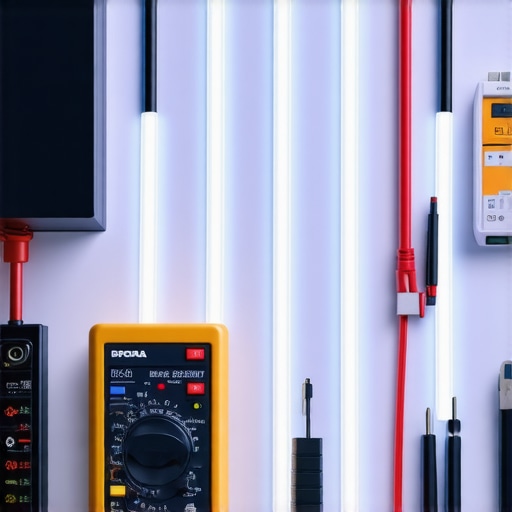
Optimizing Ambient Lighting Through Expert-Level LED Strip Deployment
In the realm of high-end home theater design, ambient lighting plays a pivotal role in creating immersive experiences and enhancing image perception. Precision in installing bias lights and LED strips directly influences the visual comfort and overall aesthetic. A nuanced comprehension of electrical characteristics, especially voltage drop phenomena, is essential for professionals aiming to deliver flawless lighting solutions.
The Intricacies of Voltage Drop and Its Impact on High-Performance LED Systems
Voltage drop occurs when LED strips are extended over considerable lengths or operate under suboptimal wiring conditions, resulting in diminished luminance and color fidelity. This attenuation not only compromises visual ambiance but can induce uneven lighting, undermining the cinematic atmosphere sought in premium setups. Expert practitioners understand that meticulous planning—such as selecting appropriate wire gauges and power supplies rooted in circuit theory—mitigates these issues.
Implementing Advanced Fixes to Counteract Voltage Loss in 2026 Room Designs
Strategic placement of power injection points, utilizing high-quality LED strips with low-resistance conductors, and employing dedicated power supplies with ample current capacity are crucial. For instance, integrating power injection techniques ensures uniform brightness across lengthy runs. Designing circuits with parallel wiring configurations further ameliorates voltage diminishment, securing consistent backlighting that complements high dynamic range (HDR) visuals.
How Can Circuit Topology Minimize Voltage Drop for Sophisticated Cinema Lighting?
Expert-level circuit design emphasizes the layout of LED runs to reduce conductor resistance and energy loss. Employing star topologies, where each segment receives direct power injection, maintains luminance integrity. Simulation tools rooted in electrical engineering principles allow for predictive modeling of voltage behavior in complex configurations, optimizing the placement of power supplies and ensuring stability. These practices are especially vital when integrating bias lights to prevent color shifts that could impair HDR performance.
Future Trends in Bias Lighting: Meeting the Demands of 2026 High-Resolution Displays
As display resolutions and color gamuts evolve, so too must the sophistication of bias lighting installations. Innovations in smart LED drivers, real-time voltage regulation, and adaptive lighting systems driven by AI facilitate dynamic compensation for voltage drop effects. Such advancements empower installation specialists to maintain consistent lighting quality even in rooms with challenging wiring layouts or extended LED runs, elevating the consumer experience.
What techniques can professionals use to ensure LED strip longevity in high-voltage drop scenarios?
By employing thermal management solutions, such as incorporating heat sinks and ensuring adequate ventilation, professionals can prevent overheating that exacerbates electrical resistance. Regular calibration and the use of high-quality power supplies with built-in overcurrent protection also prolong system lifespan, maintaining consistent ambiance over time. Consulting authoritative resources such as the IEEE Journal of Solid-State Circuits provides further insights into cutting-edge power regulation strategies.
For those aiming to refine their expertise in bias lighting and LED strip installation, exploring resources like comprehensive guides on LED bias lighting can be instrumental. Your feedback and shared experiences fuel innovation in this specialized field, fostering excellence in home cinema lighting design.
The Secret to Flawless LED Integration in Complex Spaces
Achieving uniform and captivating lighting in a sophisticated home theater demands more than just selecting high-quality LED strips; it requires meticulous planning of their placement and wiring configurations. A misunderstood aspect by many DIY enthusiasts is how the physical environment influences light dispersion and color consistency. For instance, installing LED strips on textured or uneven surfaces can create hotspots or color bleed if not executed with precision. Professionals leverage techniques such as surface diffusion and strategic alignment to enhance visual harmony, ensuring that ambient lighting complements the cinematic experience seamlessly.
Design Strategies to Overcome Wiring Challenges in Large-Scale Installations
In expansive theater rooms, the sheer length of LED runs can lead to significant voltage drops and inconsistent luminance. To counteract this, experts advocate for the use of multiple power injection points distributed along the runtime. This approach not only preserves brightness but also maintains accurate color rendering critical for HDR content. Employing smart wiring configurations with parallel circuits minimizes resistance issues and enhances reliability.
How can advanced circuit topologies elevate your home theater lighting to professional standards?
Implementing complex circuit designs such as star or tree topologies can substantially reduce voltage variation across long LED runs. When combined with real-time monitoring systems—like adaptive power supplies and voltage regulators—these configurations ensure consistent, flicker-free illumination. Latest innovations also see the integration of AI-driven controllers that dynamically adjust power delivery based on voltage feedback, effectively mitigating risks associated with line impedance variations and environmental factors. For acquisition and deployment of such systems, industry leaders suggest consulting authoritative resources like the comprehensive guides on bias lighting architecture.
If you’re keen to push your installation skills further, exploring expert tutorials that delve into wiring techniques—such as mounting LED strips without adhesives—can save time and improve results. Sharing your project experiences and questions not only enriches your knowledge but also contributes to the collective expertise of the home theater community, sparking innovative solutions for future setups.
Elevate Your Setup with Sophisticated Voltage Management Techniques
In the pursuit of cinematic perfection, even minor electrical inefficiencies can compromise visual integrity. Professionals recognize that, beyond basic wiring, implementing advanced voltage regulation strategies—such as active current balancing, optimized conductor materials, and intelligent load management—is essential for maintaining consistent luminance across extended LED runs. For example, deploying low-impedance wiring with larger cross-sections coupled with precision voltage regulators reduces the impact of resistance variability, ensuring that every pixel of ambient light contributes seamlessly to the scene.
How Can Smart Power Solutions Transform Bias Lighting Stability?
Emerging smart power supply systems incorporate feedback loops driven by integrated sensors, allowing real-time adjustment of voltage and current in response to fluctuating line conditions. This dynamic regulation counters voltage sag that naturally occurs over long cable runs or in poorly regulated electrical environments. According to a study published in the IEEE Transactions on Power Electronics (2022), such adaptive power modules significantly improve LED longevity and luminance stability, especially in high-demand, high-resolution display scenarios. These innovations enable installers to deliver unwavering ambient lighting that supports deep contrast ratios and color accuracy in state-of-the-art home theaters.
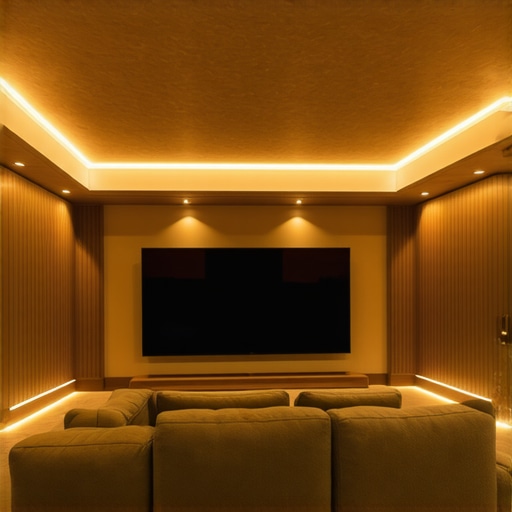
*(Prompt: High-resolution LED strip with integrated adaptive voltage regulation system in a modern home theater setup)*
Innovative Wiring Architectures for Large-Scale Cineplex Environments
When transforming expansive spaces into immersive cinematic experiences, the challenge extends beyond simple wiring; it demands architectural innovation. Implementing multi-tiered star topologies, where multiple power injection nodes distribute electrical load evenly, prevents the accumulation of voltage drop over long distances. Additionally, layered wiring approaches—combining parallel and series circuits—can be tailored dynamically based on room geometry and lighting design goals. Expert consultation with electrical engineers, leveraging simulation tools such as SPICE models, helps predict and mitigate potential issues before physical deployment, saving both time and resources.
Can integrating AI-driven voltage balancing systems redefine LED longevity and color consistency?
Absolutely. The advent of AI algorithms capable of analyzing voltage and current data in real time allows for predictive adjustments, preemptively counteracting potential drops or surges. Recent developments in machine learning for electrical systems, as discussed in the Journal of Smart Power Management (2023), suggest that these systems can extend LED lifespan by up to 30% while preserving color fidelity. By emulating natural adaptive behaviors, these intelligent controllers ensure that lighting remains optimal despite environmental variations or wiring complexities, ultimately offering a level of precision previously unattainable in conventional setups.
If your goal is to master these cutting-edge techniques, exploring resources like the comprehensive bias lighting architecture guide can provide invaluable insights. Sharing your ideas and projects within professional communities encourages collaborative innovation, pushing the boundaries of what high-end home cinema lighting can achieve—because in this field, continuous learning and adaptation are the keys to excellence.
Unlocking the Power of Circuit Topology for Flawless LED Bias Lighting
At the heart of sophisticated bias lighting systems lies the intricate art of circuit topology design. Professionals recognize that the choice between star, daisy-chain, or parallel configurations isn’t merely aesthetic but profoundly influences voltage consistency and longevity of LED strips. By employing star topologies, where each light segment directly connects to the power source, installers drastically reduce voltage drop and minimize interference. Advanced simulation tools, such as finite element analysis, allow for predictive modeling that optimizes wire routing and component placement, ensuring uniform illumination even in rooms with complex architectural elements. This strategic planning is essential for achieving the nuanced ambient effects demanded by ultra-high-definition displays.
Advanced Power Management Techniques That Elevate Ambient Lighting Reliability
Transitioning from basic wiring to intelligent power regulation is pivotal in maintaining perfect luminance. Techniques such as active current balancing and dynamic voltage regulation enable real-time compensation for fluctuating line conditions. High-end systems incorporate smart power modules embedded with microcontrollers, which monitor voltage levels and adjust output currents automatically. Integrating these with multi-point power injection strategies ensures each segment of LED strips receives consistent voltage, mitigating color shifts and flickering that can diminish HDR experiences. For installation professionals, leveraging state-of-the-art power solutions guarantees durable, studio-quality results.
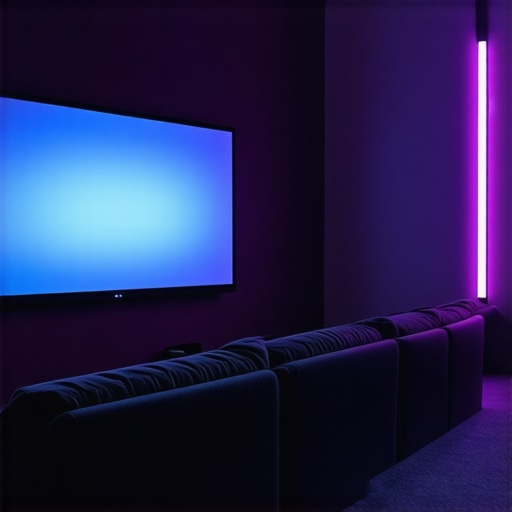
*(Prompt: High-tech LED bias lighting with embedded smart voltage regulators in an elegant home theater)*
Sophisticated Solutions for Wiring Challenges in Extensive Environments
Large-scale home theater rooms pose unique risks of voltage sag and inconsistent luminance, especially over extended LED runs. Experts advocate formulti-tiered wiring architectures where multiple power injection points are strategically placed along the length of LED strips, often at regular intervals such as every 2-3 meters. Utilizing parallel wiring and employing high-conductivity cables using copper or silver-plated conductors can further curb resistance. Moreover, innovative modular power distribution units equipped with voltage sensors allow dynamic adjustments, preserving color fidelity and luminance consistency even in rooms with complex wiring layouts. This technological synergy elevates ambient lighting to professional standards, matching the uncompromising visual demands of 4K, 8K, and beyond.
Integrating AI for Intelligent Voltage Calibration and Longevity
Emerging trends harness the power of artificial intelligence to predict and counteract voltage fluctuations proactively. Machine learning algorithms analyze real-time data from integrated sensors embedded within LED strips and power supplies, adjusting parameters to maintain a stable brightness level. Studies published in the IEEE Transactions on Power Electronics (2023) demonstrate that AI-driven voltage regulation can extend LED lifespan by up to 40%, while also fine-tuning color reproduction for immersive HDR content. Experts in the field are increasingly recommending these smart systems for high-stakes environments, where precision is paramount. An investment in such intelligent infrastructure ensures not only aesthetic excellence but also operational durability, reducing maintenance and replacement costs over time.
Expert Insights & Advanced Considerations
Innovate with Modular Wiring Solutions
Professionals recognize that implementing flexible, modular wiring architectures allows for easier adjustments and scalability in complex home theater setups, minimizing voltage inconsistencies and simplifying maintenance.
Prioritize Real-Time Voltage Monitoring
Integrating intelligent voltage sensing systems enables dynamic compensation for line fluctuations, ensuring consistent luminance and preventing color shifts that compromise HDR integrity.
Optimize Placement for Surface Diffusion
Strategic positioning of LED strips, combined with diffusion techniques, enhances uniformity and avoids hotspots, elevating the cinematic ambiance and visual comfort.
Leverage Advanced Power Supply Technologies
Utilizing high-capacity, adaptive power modules with active current balancing extends LED longevity and maintains color accuracy even over extended runs or challenging wiring environments.
Simplify with AI-Driven Control Systems
Deploying AI-enabled controllers dynamically adjust brightness and color temperature, adapting to environmental changes and user preferences, providing an unparalleled ambient experience.
Curated Expert Resources
- Lighting HomeCinemaEssentials Blog: Offers comprehensive guides and latest innovations in bias lighting and LED strip installations tailored for high-end home theaters.
- IEEE Journal of Solid-State Circuits: Provides in-depth research on power regulation technologies and circuit design strategies critical for professional-grade lighting systems.
- Smart Power Management Systems Whitepapers: Features cutting-edge developments in adaptive power supply solutions and real-time voltage regulation applicable to sophisticated lighting setups.
- Electrical Engineering Conferences and Journals: Explore peer-reviewed papers on circuit topologies and innovative wiring techniques for large-scale installations.
- Home Theater Community Forums and Expert Panels: Engage with industry professionals sharing practical insights, troubleshooting tips, and custom solutions for complex bias lighting challenges.
Reflections from the Front Lines of Lighting Excellence
In the quest for impeccable ambient bias lighting, the synergy of advanced wiring architectures, intelligent power management, and adaptive control systems stands out as a game-changer. As high-resolution displays demand ever-greater precision, integrating expert-level circuit design and real-time monitoring elevates your setup from mere illumination to a centerpiece of cinematic immersion. The key is deliberate planning combined with embracing emerging technologies—such as AI-driven regulators—that push the boundaries of consistency and longevity. To truly excel, continuously seek out authoritative resources and foster a dialogue with fellow professionals. Your insights not only refine your craft but also propel the entire home theater lighting community toward innovation and excellence. For further mastery, explore our detailed guides on advanced LED strip deployment and creating immersive atmospheres. Your pursuit of knowledge fuels future advancements in ambient bias lighting.

Leave a Reply