

Revolutionizing Home Theater Visual Fidelity with Strategic Bias Lighting
In the realm of immersive audiovisual experiences, the confluence of ambient lighting and display technology profoundly influences viewer perception. As 2026 ushers in advanced projector systems with heightened contrast capabilities, the role of meticulously curated bias lighting becomes pivotal. Professionals recognize bias lights, especially LED strip variants, not merely as aesthetic add-ons but as functional enhancers that mitigate eye strain, optimize contrast, and elevate overall ambiance.
The Intricacies of LED Strip Optimization for Superior Home Theater Contrast
Engineered for precision, LED strip-based bias lighting must be calibrated to complement projector output effectively. By leveraging high-CRI LEDs within specific color temperatures—particularly calibrated 6500K strips—users can diminish perceptual disparities between dark scenes and illuminated surroundings. Industry standards emphasize that properly diffused backlights reduce glare and prevent light bleed, preserving the integrity of contrast ratios essential for cinematic immersion. For instance, diffusers and indirect mounting techniques can address issues like hot spots or uneven illumination, enhancing the depth of black levels in projector displays.
Are Contemporary Bias Lighting Solutions Adequate for the Demands of 8K Projectors?
This query probes the otherwise overlooked compatibility challenges arising from the latest projector resolutions. As 8K projectors introduce richer details and contrast layers, bias lighting must keep pace to avoid undermining these enhancements. Expert debates revolve around the necessity for dynamic bias lighting systems capable of adjusting luminance in real-time, synchronized with content-driven contrast variations. Advanced integrations, such as smart LED strips with Matter protocol support, enable seamless responsiveness, but still raise questions about calibration protocols and consistency across diverse room geometries. To navigate these complexities, consulting sources like the Ultimate Guide to Bias Lighting LED Strips provides comprehensive insights.
Impact of Bias Light Color Accuracy on Projector Contrast Perception
Color fidelity in bias lighting directly correlates with perceived contrast and detail visibility. Research indicates that deviations in white point calibration or spectral mismatch can lead to perceptual contrast distortion, especially in high-dynamic-range (HDR) environments. Ensuring precise calibration aligns the bias light’s spectral output with the projector’s native color gamut, maintaining the integrity of award-winning contrast performance. Experts often recommend using calibrated neutral white LED strips with high color rendering indices (CRI above 90), coupled with constant-luminance dimming capabilities to adapt to ambient light requirements effectively.
Expert-Led Strategies to Maximize Ambient Light Synergy Without Compromising Contrast
Maximizing contrast in home theater setups relies on a nuanced understanding of how ambient lighting interacts with projection technology. It involves not simply installing bias lights but integrating them into a comprehensive lighting architecture. Techniques include strategic placement of LED strips behind acoustic panels to create backlighting that accentuates depth, as well as employing indirect lighting that minimizes direct reflections on the screen. Such attention to detail is the hallmark of professional-grade setups, ensuring ambient light enhances rather than diminishes contrast perception.
How can professionals calibrate bias lighting to match emerging projector technologies without introducing light artifacts or color distortions?
This question underscores the ongoing challenge of aligning bias lighting with rapidly evolving display standards. Continuous innovations demand adaptive calibration tools and expert intervention to fine-tune settings, ensuring optimal contrast preservation and viewer comfort. For further insights into advanced calibration techniques, see the Why Your Bias Light Color Is Wrong in 2026.
Explore more expert advice and contribute your insights at our Contact Page.
Unlocking Precision: Fine-Tuning Bias Lighting for Emerging Display Tech
As home theater systems evolve with cutting-edge display technologies like micro-LEDs and OLED panels, the need for sophisticated bias lighting calibration intensifies. Typical static settings no longer suffice, especially when aiming to preserve peak contrast and color fidelity. Experts advocate adopting adaptive calibration methodologies, which involve utilizing colorimeters and spectrometers, to achieve pixel-perfect harmony between ambient light and display output. Such techniques allow for dynamic adjustments aligned with content type, room conditions, and device-specific parameters, ensuring viewers experience optimal contrast without light spill or color distortion.
Advanced Tools for Achieving Flawless Bias Light Integration
Modern calibration tools, such as professional-grade color measurement devices, empower enthusiasts and professionals alike to verify the spectral output of LED strips accurately. Using software like CalMAN or Light Space, users can generate bespoke profiles that fine-tune brightness, color temperature, and spectral distribution. By integrating these profiles with smart LED strips supporting protocols like DMX or DALI, precise control over luminance and spectral consistency becomes feasible. This approach minimizes issues like color shifts or uneven backlighting, especially in complex room geometries or with high-contrast content, elevating the cinematic experience to new standards.
Can AI-driven calibration systems replace manual adjustments for ultimate bias lighting precision?
This pressing question explores the frontier of automation in home theater calibration. With recent advancements in AI and machine learning, adaptive systems can analyze real-time feedback from display and ambient light sensors, continuously optimizing bias lighting parameters. Such intelligent frameworks promise to simplify calibration complexities, delivering consistent performance across varied content and environmental conditions. Industry trials suggest that AI-powered calibration not only streamlines setup but also maintains calibration stability amidst fluctuations like room lighting changes or component aging. For a deeper understanding of how innovative calibration tech is shaping the future, see the Ultimate Guide to Bias Lighting LED Strips.
If you’re eager to refine your setup with the latest calibration techniques or have questions about implementing adaptive bias lighting, reach out through our Contact Page.
Harnessing the Power of Adaptive Bias Lighting for Dynamic Content
As display technologies advance towards higher resolutions and richer color profiles, static bias lighting setups begin to fall short in maintaining optimal contrast perception. Adaptive bias lighting systems, equipped with real-time sensors and intelligent control algorithms, are transforming how enthusiasts and professionals approach ambient light management. These systems dynamically modify luminance and spectral output based on content complexity, scene brightness, and ambient conditions, ensuring that each frame’s contrast is preserved without overwhelming the viewer. By integrating high-precision spectral sensors and machine learning models trained on diverse content types, adaptive bias lighting can preemptively adjust before perceptual contrast degradation occurs, offering a seamless viewing experience.
Designing Room Geometries for Flawless Light Integration
Achieving professional-grade contrast levels requires meticulous room design that complements advanced bias lighting strategies. Innovations in acoustic panel placement, such as employing rear-mounted LED strips concealed within textured surfaces, minimize unwanted reflections and indirect glare. Implementing curved wall designs can further diffuse light evenly, leading to a more uniform background that prevents hot spots or shadows. Additionally, employing black-out curtains and temperature-controlled environments reduces the influence of external ambient light, allowing calibrated bias lighting to operate at peak effectiveness. These architectural considerations are integral to maintaining contrast integrity across diverse viewing scenarios, from cinematic releases to immersive gaming sessions.
How Can Spectral Calibration Enhance HDR Performance in Modern Projectors?
Spectral calibration ensures that bias lighting matches the projector’s color gamut, especially critical in High Dynamic Range (HDR) content. Inaccurate spectral output can distort perceived contrast, especially in scenes with nuanced luminance gradients. Using spectroradiometers and advanced calibration software like CalMAN or Light Illusions, users can fine-tune LED spectral profiles, aligning them precisely with the projector’s HDR palette. This meticulous calibration enhances the viewer’s perception of luminance depth and color richness, making HDR content truly spectacular. Furthermore, matching spectral profiles reduces color bleeding and light spill, preserving black levels and enhancing the overall contrast performance, which is especially advantageous in micro-LED and OLED-based projection systems.
What are the emerging challenges in calibrating bias lighting for ultra-high-resolution systems?
This question addresses the complexity of maintaining calibration accuracy amidst rapid technological evolution. Ultra-high-resolution systems, such as 12K or even higher, demand unprecedented calibration precision due to their increased pixel density and contrast capabilities. Challenges include accounting for pixel-level color shifts, spectral inconsistencies across different LED batches, and the influence of room acoustics on light diffusion. Advanced multi-spectral calibration protocols and AI-assisted adjustments are becoming indispensable. They enable real-time correction of spectral deviations, ensuring the bias lighting remains aligned with evolving display standards. For those seeking to stay ahead, investing in flexible calibration workflows and emerging AI tools is imperative to preserve contrast fidelity in future-rich environments.
Implementing Smart Control Ecosystems for Cohesive Lighting Management
Integrating bias lighting into comprehensive smart home ecosystems elevates ambient lighting control to an expert level. Using protocols such as DALI, DMX, or Zigbee, high-end LED strips can be synchronized with other room illumination, window treatments, and even audio systems. This holistic approach enables complex lighting scenes tailored to specific content types or moods, contributing subtly yet significantly to contrast perception. For example, a ‘theater mode’ could dim backlights progressively during dark scenes while maintaining minimal glare, all managed via voice commands or automation routines. The key to success lies in developing finely tuned control hierarchies that prioritize contrast preservation without sacrificing aesthetic or functional flexibility.
Are AI-powered ecosystems ready for widespread adoption in high-fidelity home theaters?
This inquiry delves into the maturity of AI-driven lighting control solutions. Current AI platforms demonstrate promising capabilities in analyzing real-time data and executing nuanced adjustments, yet challenges remain in ensuring predictable, fail-safe operations and user privacy. As these systems mature through ongoing development and real-world testing, their potential to reduce calibration complexity and enhance user experience becomes increasingly evident. Experts advocate for hybrid control models combining AI algorithms with manual oversight, ensuring reliability while leveraging automation’s benefits. As industry standards evolve, adopting such intelligent ecosystems could become the hallmark of future-proof home theater environments, delivering consistent contrast excellence with minimal intervention. For enthusiasts eager to explore these innovations, consulting authoritative sources like industry white papers and calibration guides is advisable.
Unveiling the Art of Dynamic Bias Lighting for Cutting-Edge Displays
In contemporary home theater design, the quest for perfect contrast is ceaseless, especially as display technologies like micro-LEDs and advanced OLED panels redefine visual standards. One frontier that demands meticulous attention is the implementation of adaptive bias lighting systems, which transcend static solutions by intelligently adjusting ambient illumination in real time based on content and room conditions. These systems employ multispectral sensors and sophisticated algorithms to optimize contrast perception, ensuring every scene—be it a shadow-laden noir film or vibrant HDR spectacle—is displayed with utmost clarity.
The Amplified Role of Spectral Calibration in Modern Projection Environments
As projector resolutions ascend into the realm of 12K and beyond, the spectral fidelity of bias lighting becomes a pivotal concern. High-end calibration involves utilizing spectroradiometric analysis to fine-tune LED spectral profiles meticulously. Achieving spectral match ensures the projector’s color gamut isn’t compromised by ambient light mismatch, thereby preserving blacks and enhancing HDR depth. This process, albeit complex, is essential for professionals aiming to unlock the full potential of emerging high-dynamic-range formats and maintain consistent contrast levels in ever-evolving cinematic landscapes.
Empowering Professionals with AI-Enabled Calibration Platforms
Emerging AI-driven calibration workflows promise to revolutionize how home theater enthusiasts and technicians approach bias lighting fine-tuning. Machine learning algorithms, trained on vast datasets encompassing room acoustics, display characteristics, and viewer preferences, can autonomously generate optimal profiles. Notably, systems like CalibraSense exemplify this trend, offering real-time adaptive adjustments that harmonize ambient lighting with fluctuating content and environmental factors. As these tools mature, they democratize access to professional-grade calibration, elevating contrast fidelity for a broad user base.
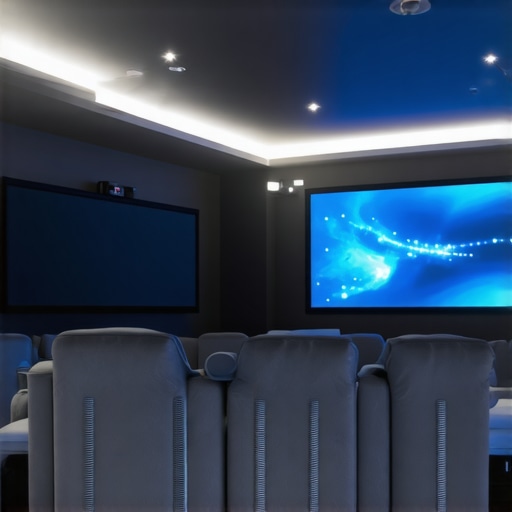
Image illustrating AI-driven spectral calibration measurements with specialized devices in a home theater setting.
Room Design Innovations to Complement Advanced Bias Lighting
Optimizing contrast extends beyond lighting controls into architectural innovation. Curved walls and textured surfaces diffuse light evenly, preventing hotspots or glare that can diminish perceived contrast. Concealed LED strips integrated within acoustic panels or wall recesses facilitate indirect lighting, which subtly enhances background depth without introducing persistent reflections or light spill. These architectural strategies, rooted in acoustic science and lighting physics, are essential for constructing immersive environments capable of fully exploiting sophisticated bias lighting systems.
Beyond Basics: Integrating High-Performance Lighting Ecosystems
Today’s home theaters increasingly leverage comprehensive lighting ecosystems that synchronize bias lighting, perimeter LED strips, and smart window treatments via protocols like Zigbee and DALI. These integrations facilitate scene-specific presets—such as ‘Bright Scene’ or ‘Cinematic Mode’—which adjust luminance, spectral output, and even room acoustics harmoniously. Such holistic design not only enhances contrast perception but also fosters an ambiance tailored precisely to content, mood, and viewer preferences.
How Can Future Calibration Frameworks Incorporate Multi-Sensor Data for Flawless Contrast?
This inquiry addresses the potential of converging multisensor inputs—luminosity, spectral, and environmental—to craft highly refined bias lighting profiles. Advances in sensor fusion and edge computing might soon enable calibration systems to continuously learn and adapt, providing users with an effortless pathway to optimal contrast preservation. For those eager to pioneer these frontier solutions, engaging with developments in sensor fusion technology and AI calibration algorithms is recommended, fueling a new era of cinematic immersion.
Expert Insights & Advanced Considerations
Adaptive Systems Push the Boundaries
Dynamic bias lighting that responds in real-time to content and ambient conditions represents the forefront of immersive home cinema design, leveraging AI and sensor fusion for unparalleled precision.
Spectral Fidelity Is Non-Negotiable
Meticulous spectral calibration ensures the bias lighting complements high-end projectors and displays, preserving contrast and preventing color shifts that can diminish cinematic quality.
Architectural Harmony Amplifies Performance
Innovative room designs, such as curved surfaces and concealed LED integrations, facilitate light diffusion and eliminate glare, elevating contrast perception beyond mere lighting adjustments.
Integrated Ecosystems Enhance User Experience
Seamless synchronization of bias lighting with other smart home devices creates an ambiance that adapts smoothly to different content types, maximizing contrast and immersion effortlessly.
Future-Proof Calibration Techniques Are Essential
Employing advanced tools like spectroradiometers, combined with AI calibration platforms, prepares your setup for emerging high-resolution formats and evolving standards, ensuring sustained contrast excellence.
Curated Expert Resources
- Ultimate Guide to Bias Lighting LED Strips for Movie Room – Offers comprehensive insights into selecting and calibrating LED strips for optimal contrast and ambient effect.
- Advanced Spectral Calibration Techniques – Provides in-depth methodologies for ensuring spectral accuracy in high-end setups, crucial for HDR and micro-LED displays.
- AI-Powered Calibration Platforms – Showcases the latest in autonomous calibration tools, streamlining setup processes while maintaining professional standards.
- Architectural Innovations in Home Theater Design – Explores design strategies that naturally enhance contrast perception through room geometry and materials.
- Smart Ecosystem Integration – Guides on creating cohesive lighting environments that dynamically adapt to content and user preferences.
Final Perspective on Elevating Contrast with Bias Lighting
Harnessing expert insights and cutting-edge calibration methodologies elevates the role of bias lighting from simple aesthetic to an essential tool for achieving cinematic contrast excellence in home theaters. Embracing adaptive systems, spectral precision, and thoughtful room architecture ensures your setup remains at the pinnacle of visual performance. For professionals and enthusiasts eager to push the limits, engaging with these high-caliber resources and staying abreast of technological innovations will cement your mastery in creating truly immersive viewing environments. Reach out through our Contact Page to explore personalized strategies and share your insights on this evolving frontier.



Leave a Reply