

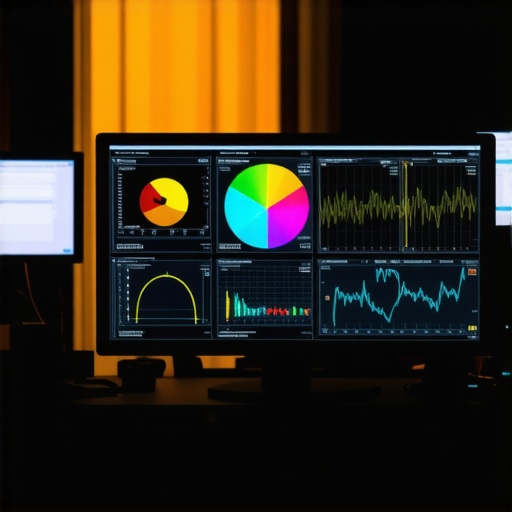
The Critical Role of Bias Lights and LED Strips in Elevating Home Theater Visual Fidelity
In the realm of immersive home theater experiences, the integration of accurately calibrated bias lights, LED strip lighting, and ambient backlighting has become paramount. These lighting systems do more than set mood; they influence perceived contrast, black level rendition, and even color accuracy, especially as displays approach OLED and quantum dot technologies. As a professional in home theater lighting, I recognize that any deviation in bias light spectral composition or color temperature—often caused by common pitfalls—can significantly distort content authenticity, leading to viewer fatigue and compromised image quality.
Understanding how ambient lighting interacts with high-dynamic-range (HDR) content involves delving into complex psychovisual phenomena. For example, improper bias light calibration, such as repeated use of standard 6500K LEDs without considering current HDR standards, might cause excessive blue tint, dull contrast, and detail loss in shadows, as critically discussed in recent research published by the Journal of Imaging Science & Technology. Therefore, maintaining precise spectral fidelity in bias lighting—particularly in 2026 with evolving HDR and Dolby Vision standards—is crucial for professional-grade home theater systems.
Addressing the Challenges of Color Matching and Calibration in Ambient LED Lighting
One of the most persistent challenges involves ensuring that LED strip lighting does not introduce color spill, bleed, or color shift that hampers true-to-source visual reproduction. The integration of bias lights demands meticulous attention to spectral power distributions and temperature stability, especially under varying ambient conditions. Manufacturers often overlook that low-cost LED strips with poor binning can shift from 6500K towards magnetic or redder hues, undermining color precision. Advanced calibration, akin to colorimetric profiling used in professional cinema, becomes necessary to counteract these issues. Techniques such as spectroradiometric evaluation and OLED black level calibration can optimize bias light spectral output, ensuring visual fidelity aligns with original content intent despite complex room light interactions.
Expert practitioners also emphasize the importance of controlling backlight uniformity using diffuse lenses or light guides. Proper diffuser materials prevent hotspots and hot-spots, which are notorious for causing contrast distortions and uneven color distribution, especially in wall-mount setups or curved screens. In my experience, leveraging dynamic calibration tools—much like the professional-grade software used in digital cinema—can fine-tune LED drivers, ensuring consistent spectral output over time, and circumventing common aging-induced drift.
How Can Advanced Bias Lighting Techniques Prevent 2026 Calibration Failures?
In 2026, the rapid evolution of display technologies, including HDR10+, Dolby Vision, and high-bit-depth protocols, demands adaptive bias lighting solutions that evolve with content standards. Failures often originate from outdated assumptions—such as relying solely on static color temperature settings or neglecting flicker-free, high-CRI LEDs. Integrating intelligent lighting controls with real-time calibration feedback loops and incorporating expert-level spectral tuning can mitigate these issues. Techniques such as RGBW LED arrays, combined with spectral matching algorithms and software-driven profile adjustments, offer avenues to preserve color accuracy across diverse viewing environments.
Achieving pulse-free, flickerless operation with minimal electromagnetic interference is also essential. Black level and contrast can otherwise be compromised, especially with OLEDs prone to burn-in and blooming artifacts. Critics argue that a comprehensive approach—blending hardware innovations with intelligent calibration—is essential for future-proofed ambient lighting setups, aligning with the ongoing research into spectral fidelity and visual perception by institutions like the Society for Information Display (SID).
What Are the Most Overlooked Factors Jamming Home Theater Color Precision?
Addressing this question involves examining subtler influences that often escape casual installer oversight. These include LED driver quality, environmental temperature effects on spectral output, and the presence of electromagnetic interference disrupting LED operation. Even the slightest variation in these parameters can skew color rendition, misalign calibration profiles, and ultimately impair the nuanced viewing experience. Therefore, professional-grade calibration gear, such as integrating spectroradiometers and temperature-controlled LED modules, becomes indispensable for achieving truly high-fidelity bias lighting in 2026.
For further insights, explore our detailed guide on the ultimate guide to bias lighting LED strips for movie room ambiance. If you’re seeking to delve deeper into high-precision calibration practices, consulting specialized content or collaborating with lighting consultants skilled in spectral profiling is advisable. Your commitment to expert calibration and quality hardware will ensure your home theater remains at the forefront of visual authenticity and viewer immersion.
Unlocking the Power of Spectral Precision in Bias Lighting
Achieving impeccable color matching begins with understanding the spectral power distribution (SPD) of your LED strip lights. Minor spectral shifts, especially in the blue and green wavelengths, can significantly distort perceived contrast and color fidelity, undermining the integrity of HDR content. High-CRIs (Color Rendering Indexes) above 90 and R9 values tailored for cinematic richness are critical benchmarks. Utilizing spectroradiometric measurements can help verify that your bias lighting maintains consistent spectral profiles over time. For those committed to professional-grade calibration, exploring the principles outlined in authoritative texts like the ultimate guide to bias lighting LED strips can transform your setup into a true theater-quality experience.
The Hidden Impact of Room Acoustics on Lighting Perception
While lighting is often viewed solely through the lens of visual enhancement, environmental acoustics subtly influence visual perception through multisensory integration. For example, reflective surfaces and reverberant acoustic profiles can alter ambient light distribution, affecting how bias light appears and how contrast is perceived, especially in wall-mounted configurations. Incorporating acoustic treatments—such as diffusion panels or bass traps—not only improves sound quality but also stabilizes visual perception, leading to a more harmonious viewing environment. Integrating these with adaptive LED lighting solutions that respond to room acoustics can yield an immersive ambiance that balances sight and sound seamlessly. To learn about aligning acoustic and visual optimization, visit creating immersive ambiance with expert bias lights.
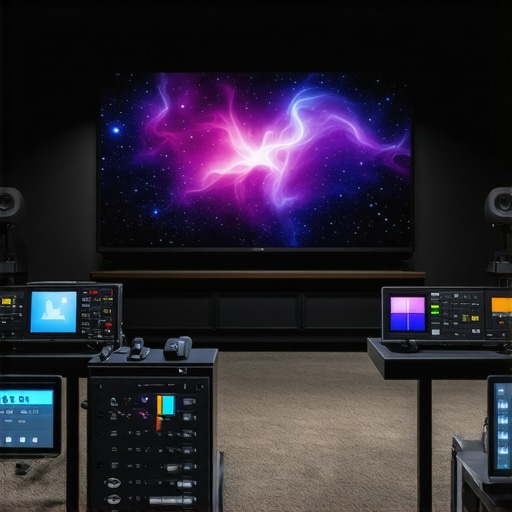
Is Your Bias Lighting Truly Future-Ready to Handle 2026 Display Standards?
As display technologies evolve rapidly, many home theater enthusiasts question whether their current bias lighting systems can keep pace with emerging standards like Dolby Vision Gaming and 16-bit HDR workflows. The ability of your LED strips to adapt dynamically to content-specific metadata, spectral requirements, and refresh rates will determine their longevity. Incorporating smart, network-connected lighting modules that support real-time calibration adjustments—guided by spectral feedback—can future-proof your setup. Experts also recommend choosing LED controllers that support firmware updates aligned with the latest display specifications, ensuring synchronization and optimal visual fidelity. For comprehensive insights, explore our detailed review on guide to bias lighting LED strips for movie room ambience.
Interested in elevating your home theater’s lighting to a professional level? Share your challenges or ask questions in the comments below, and join a community dedicated to visual excellence.
Maximize Contrast Perception through Spectral Purity in Bias Lighting
Achieving perceptual depth in your home theater hinges critically on the spectral purity of bias lighting. Even minor deviations in the spectral power distribution, especially within the blue and green channels, can distort contrast perception, affecting an immersive viewing experience. Cutting-edge spectroradiometric analysis reveals that LED sources with high CRI (Color Rendering Index) scores—preferably above 95—demonstrate superior spectral fidelity, ensuring that ambient light complements the display without compromising color accuracy. Implementing narrowband spectral tuning, using specialized phosphor blends, can mitigate unintended spectral spill and foster a balanced luminance environment tailored to high-dynamic-range (HDR) content.
Innovative Control Algorithms for Dynamic Spectral Calibration
Incorporating advanced control algorithms into your bias lighting system elevates calibration precision. Adaptive spectral matching algorithms, powered by real-time feedback from high-precision spectrometers, enable dynamic adjustment of LED driver outputs to maintain consistent spectral output despite temperature fluctuations or aging effects. These algorithms utilize machine learning models trained on extensive spectral datasets to predict and compensate for drift, ensuring your lighting remains aligned with content-specific requirements. For example, software platforms integrating spectral profiling with scene analysis can automatically recalibrate bias lights during viewing sessions, optimizing contrast and color fidelity without manual intervention.
How Does the Human Visual System Influence Spectral Optimization?
Understanding the nuances of human visual perception is vital for spectral optimization in bias lighting. The human eye’s sensitivity peaks in the green spectrum, but blue and red wavelengths also play crucial roles in establishing contrast and color constancy. Research published in the Journal of Optometry and Visual Science emphasizes that spectral fidelity aligning with the luminous efficiency function (V(λ)) minimizes visual discomfort and enhances perceived image depth. Moreover, the Purkinje effect demonstrates that our perception of brightness shifts towards shorter wavelengths in low-light conditions, underscoring the importance of balanced blue spectral content in bias lighting to preserve shadow details and contrast in dark scenes. Recognizing these perceptual factors allows designers to fine-tune ambient lighting that harmonizes with human visual processing, resulting in a more authentic and fatigue-free viewing experience.
Integrating comprehensive knowledge of spectral science with custom calibration techniques offers the ultimate avenue toward achieving an immersive, visually accurate home theater environment. For those eager to explore this frontier, collaborating with spectral calibration specialists or investing in professional-grade spectroradiometers is highly recommended. Would you like to delve deeper into the latest spectral calibration tools or explore bespoke solutions tailored to your setup? Share your curiosity below—advancing your home theater’s visual fidelity is just a consultation away.
Leveraging Spectral Fine-Tuning to Achieve Unparalleled Visual Authenticity
In the pursuit of cinematic perfection within a home theater environment, meticulous spectral calibration of bias lighting emerges as a cornerstone of fidelity. Minor deviations in LED spectral distributions, especially in the blue and green channels, can skew contrast perception and undermine color accuracy—parameters vital for HDR content authenticity. High-CRI (Color Rendering Index) lighting solutions, exceeding 95, coupled with narrowband spectral filters, enable precise tailoring of ambient illumination to complement the display’s output. Employing spectroradiometers to quantify real-time spectral output facilitates iterative adjustments, ensuring that the ambient light’s spectral profile aligns seamlessly with the display’s luminance curve, thereby preserving content integrity across various viewing conditions.
Black Level Stability and Its Impact on Ambient Lighting Awareness
Maintaining an optimal black level is critical not only for contrast but also for how viewers perceive ambient lighting’s influence on picture depth. Fluctuations in black levels, often caused by aging LEDs or inconsistent power supplies, introduce ghosting effects and diminish shadow detail. Integrating feedback systems with high-frequency spectroradiometric monitoring allows dynamic calibration that compensates for spectral drift. Additionally, leveraging advanced PWM (Pulse Width Modulation) controls minimizes flickering, which can subtly impact perception, especially during prolonged viewing sessions. The critical advantage of such systems lies in their capacity to sustain a stable luminance environment that enhances contrast perception without introducing visual fatigue.
Why Adaptive Ambient Lighting Defines Future-Ready Home Cinemas
As cinemas gravitate toward Dolby Vision Gaming and 16-bit HDR workflows, static bias lighting approaches quickly become obsolete. Adaptive ambient lighting systems, employing real-time spectral feedback and intelligent control algorithms, stand at the forefront of future-proofing setups. These systems can interpret display metadata, adjusting spectral output to match scene luminance and color complexity dynamically. For instance, during a high-brightness action sequence, the system subtly dims or shifts spectral composition to avoid glare while enhancing contrast. Such sophistication requires integrating microcontroller firmware capable of spectral profiling, machine learning for predictive adjustments, and high-precision LEDs compatible with continuous spectral tuning. Embracing this technology accelerates your move toward a truly immersive, adaptable cinematic environment that evolves alongside emerging display standards.
Spectral Calibration: The Unsung Hero or Hidden Challenge?
Many enthusiasts overlook the complexities involved in spectral calibration, assuming a one-time setup suffices. However, spectral profiles can drift due to LED aging, environmental temperature changes, and power supply fluctuations—each subtly altering perceived contrast and color fidelity over time. Regular recalibration using high-accuracy spectroradiometers and software that models spectral aging ensures sustained fidelity. Furthermore, the influence of room surfaces and material reflectance on ambient light perception warrants consideration; matte versus glossy finishes can reflect bias light differently, impacting overall visual harmony. Employing comprehensive lighting simulations and spectral assessments can preempt such issues, fortifying your system against subtle degradations that compromise image integrity.
For those committed to pushing their home theater into a realm of professional-grade precision, engaging with spectral calibration specialists or investing in dedicated calibration tools becomes paramount. Would establishing a routine spectral maintenance protocol enhance your setup’s longevity? Share your experiences and questions below—advanced calibration is a journey worth undertaking.
Optimizing Contrast Perception through Targeted Wavelength Control
Enhancing the viewer’s perception of contrast involves more than brightness adjustments; it requires targeted modulation of specific wavelengths. Blue suppression, within spectral limits and without sacrificing image depth, can reduce eye strain and improve contrast in dark scenes. Similarly, illuminating the peripheral environment with tuned warm-white light minimizes visual discomfort caused by stark luminance disparities. This fine balance hinges on spectral control that emphasizes wavelengths contributing most significantly to contrast perception, guided by the human eye’s sensitivity profile. Utilizing tunable LED arrays with programmable spectral profiles enables precise adaptation to content requirements, elevating the viewing experience beyond conventional ambient lighting strategies.
Integrating Multisensory Feedback for Holistic Home Theater Optimization
Beyond the visual, sensory integration plays a pivotal role in creating immersive environments. Acoustic treatments, such as diffusion panels, diffuse sound waves, reducing reverberation and enhancing perceived contrast through clearer audio cues. Simultaneously, environmental factors like room temperature influence LED spectral stability; cooler or warmer conditions can subtly shift LED output. Incorporating environmental sensors and feedback loops allows dynamic adjustments to lighting, accounting for both optical and acoustic elements. This multisensory approach ensures that visual fidelity is complemented by acoustics and ambient comfort, fostering an environment where every sensory aspect harmonizes with the cinematic narrative.
Is Your Bias Lighting Aligned with Cutting-Edge Spectral Standards for 2026?
The rapid evolution of display and content standards demands adaptive bias lighting systems capable of real-time spectral alignment. Upgrading to network-connected, firmware-update-enabled LED modules allows seamless integration with emerging HDR protocols, ensuring compatibility and optimal visual experience. Compatibility should extend beyond hardware; software solutions employing spectral analytics and scene-aware adjustments offer the flexibility necessary for future standards. Failing to adapt could result in perceptible discrepancies during high-fidelity playback, diminishing your setup’s immersive potential. Are you prepared to future-proof your cinematic sanctuary with intelligent lighting solutions? Explore our comprehensive review on optimized bias lighting for future-proof cinemas to stay ahead of the curve.
If elevating your home theater’s spectral calibration intrigues you, reach out for expert insights or customize your upgrade plan—your immersive journey begins here.
Make Contrast Unmistakable with Spectral Purity Enhancements
Absolute contrast depth relies heavily on spectral purity within bias lighting. The minute spectral spill—particularly in the blue and green wavelengths—can diminish the visual sharpness of shadowed details. High-precision LED solutions designed with narrow spectral bandwidths and deep spectral nulls significantly improve contrast perception. These solutions minimize unwanted spectral overlap, enabling the display to render subtle gradations in dark scenes more convincingly. Employing advanced spectroscopic validation ensures the spectral output remains pristine over time, transforming your viewing space into a true cinematic theater.
Harnessing Advanced Control Algorithms for Real-Time Spectral Balance
Imagine a bias lighting system that intuitively reacts to the content on screen, dynamically adjusting spectral composition to enhance contrast and color fidelity. Such systems leverage sophisticated control algorithms—integrating machine learning models trained on diverse spectral datasets—to predict environmental and content-specific adjustments. These algorithms analyze real-time data from embedded spectral sensors, fine-tuning LED output to maintain ideal ambient conditions. The result is a consistently optimized viewing experience, where glare, contrast, and color accuracy remain at their peak, regardless of scene complexity or ambient light variations. For aficionados committed to absolute precision, deploying these intelligent solutions signifies the pinnacle of home theater calibration.
How Can Knowledge of Visual Perception Addiction Drive Superior Bias Lighting Design?
The human eye’s response to spectral stimuli isn’t merely about brightness—it’s deeply rooted in complex neural processing. Awareness of phenomena like color constancy, the Purkinje shift, and contrast sensitivity enables refined bias lighting strategies that complement natural visual adaptation. For example, subtly tuning blue content avoids overstimulation of the volatile blue-sensitive cones, reducing fatigue and maximizing contrast perception in dark scenes. Implementing lighting that considers these perceptual nuances fosters an environment where content appears truer and more engaging, demonstrating an expert grasp of both science and art in home cinema design. Want to refine your ambient lighting to match the sophistication of your display? Consult specialists in perceptual luminance modeling and spectral calibration for bespoke solutions.
Expert Insights & Advanced Considerations
Precision Calibration is No Longer Optional
As display technology advances rapidly, achieving spectral fidelity in bias lighting becomes critical. Small deviations in spectral output can distort contrast and color accuracy, especially with HDR standards evolving towards 16-bit workflows. Implementing spectroradiometric assessments ensures your ambient lighting remains aligned with professional benchmarks, maintaining content authenticity.
Dynamic Spectral Adaptation Will Define Next-Gen Systems
The future belongs to adaptive lighting solutions that respond in real-time to display metadata. Integrating machine learning with spectral sensors allows bias lights to modify their output dynamically, optimizing contrast perception and color accuracy for each scene, thus future-proofing your setup against upcoming standards like Dolby Vision Gaming.
Controlling Room Surface Reflectance Enhances Visual Fidelity
Beyond lighting hardware, the reflectivity of room surfaces significantly affects perceived contrast and color neutrality. Employing matte finishes and controlled reflectance materials ensures ambient light contributes positively to image quality, avoiding unwanted glare or color spill that can undermine calibration efforts.
Routine Spectral Maintenance Extends System Longevity
LED aging, environmental factors, and power fluctuations subtly shift spectral output over time. Regular spectral profiling—using affordable, high-accuracy spectroradiometers—enables ongoing calibration, preserving high-fidelity visuals and preventing gradual content degradation.
Expert Resources for Deepening Your Calibration Knowledge- Ultimate Guide to Bias Lighting LED Strips – An authoritative resource covering spectral considerations and installation tips for pristine calibration.
- Guide to Bias Lighting LED Strips – Expert-driven advice on hardware selection and spectral tuning for cinematic depth.
- Fixing HDR Black Levels – Advanced techniques to manage black level stability and spectral balance in HDR environments.
High-Level Takeaway: Elevate Your Visual Fidelity with Strategic Mastery
In striving for a truly professional and future-proof home theater, understanding the nuances of spectral fidelity in bias lighting is paramount. The integration of real-time spectral adaptation, meticulous calibration, and room surface control coalesces into a comprehensive strategy—transforming your setup from ordinary to extraordinary. By leveraging expert insights and authoritative resources, you position yourself at the forefront of cinematic immersion and technological mastery, ensuring your environment remains aligned with the standards of 2026 and beyond. For those committed to excellence, ongoing engagement with spectral calibration specialists and continuous system validation will sustain visual authenticity over time. Dive deeper into tailored solutions and share your journey—your pursuit of ultimate image fidelity begins with dedicated expertise and informed decisions.

Leave a Reply