

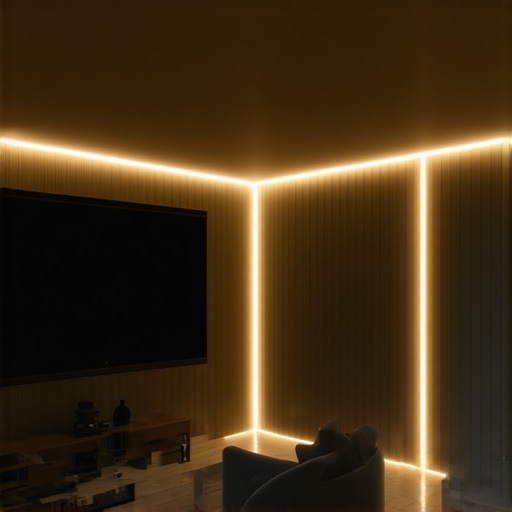
Revolutionizing Home Theater Environments Through Strategic Lighting Design
In the pursuit of cinematic perfection, home theater enthusiasts increasingly recognize that ambient lighting, particularly bias lights and LED strips, plays a pivotal role in creating immersive viewing experiences. Expert application of backlight and accent lighting not only enhances visual comfort but also influences perceived contrast and color fidelity, thereby elevating overall quality. As technological innovations converge with aesthetic refinement, understanding the nuanced deployment of bias lights and LED strip solutions becomes essential for crafting professional-grade setups.
Advanced Considerations in Incorporating Bias Lights and LED Strips
Effective integration demands a deep grasp of light layering principles—balancing direct, indirect, and reflected illumination—to reduce eye strain and improve image clarity. High-CRI LED strips, with their ability to render colors faithfully, are preferred for synchronized ambient lighting, especially when coupled with smart control systems enabling dynamic adjustments based on content or time of day. Moreover, the selection of LED color temperature—ranging from warm to cool—affects mood modulation and visual harmony within the theater space.
Consistent & Adaptive Lighting for Film Fidelity and Comfort
Professional setups often utilize tunable bias lights that adapt seamlessly to varying film genres, ensuring optimal contrast ratios and minimizing glare. Implementing backlight solutions with diffused LEDs creates a subtle glow behind screens, reducing eye fatigue during extended viewing sessions. Embracing innovations like RGBW LED strips allows for customizable color schemes, unlocking creative possibilities for thematic or seasonal ambiance enhancements, as outlined in Home Cinema Essentials’ comprehensive guide on optimal bias lighting techniques.
What Complex Factors Should Be Weighed When Choosing LED Strip Length and Brightness?
Beyond aesthetic considerations, the technical specifications of LED strips—such as lumens per meter, power efficiency, and compatibility with existing control interfaces—must be thoroughly evaluated. Proper installation techniques, including positioning in concealed channels or behind trim, impact the uniformity and longevity of lighting. Furthermore, integration with home automation ecosystems enables real-time responsiveness, fostering an immersive environment adaptable to viewer preferences and external lighting conditions.
Peer-Reviewed Insights on Light Quality Impact
Research from lighting science journals underscores the influence of ambient illumination on viewer perception, with findings indicating that properly calibrated bias lighting can enhance contrast sensitivity and reduce eye strain during extended use. For practical implementation, referencing authoritative sources such as the Lighting Design Lab’s white papers offers valuable evidence-based guidance on spectral quality and color rendition.
How Do Advanced LED Configurations Affect Perceived Sharpness and Contrast in Home Cinema?
Expert forums and industry discussions reveal that sophisticated LED arrangements, including layered backlighting and scene-specific color profiles, can significantly influence visual sharpness and contrast perception. Precise calibration, coupled with high-quality LED components, enables viewers to experience enhanced detail without sacrificing comfort, especially in environments with ambient light control challenges.
For those seeking to refine their setup further, exploring high-end solutions through expert-led strip lighting tips can offer actionable insights. As the landscape of home theater lighting evolves, embracing a science-backed, nuanced approach ensures both aesthetic excellence and technical precision.
Engage with other professionals or enthusiasts by sharing your configurations and experiences. Contributing to the collective knowledge base aids in advancing effective techniques and novel applications, fostering a community committed to cinematic fidelity.
Beyond Basics: Tailoring Lighting Dynamics to Your Viewing Atmosphere
Achieving a professional-grade home theater setup hinges on more than just installing LED strips; it requires understanding how to manipulate lighting layers to elevate visual harmony. Customizable solutions like RGBW LED strips enable precise color control, allowing you to craft scene-specific ambiances that match movie genres—from cool blues for sci-fi thrillers to warm tones for nostalgic dramas. Implementing zone-specific lighting, where different sections of the room adjust independently, can dramatically improve immersion and reduce visual fatigue, especially during long viewing marathons.
The Science of Light Spectra: Why Quality Matters in Bias Lighting
Expert research emphasizes that spectral output and color rendering index (CRI) are critical for effective bias lighting. High-CRI LED strips closely emulate natural lighting conditions, enhancing contrast perception without disrupting color accuracy on your display. As highlighted in the Lighting Design Lab’s white papers, selecting light sources with a CRI above 90 ensures that your ambient glow supports your viewing experience without compromising image fidelity. This scientific backing underscores the importance of investing in quality LED products rather than opting for low-cost alternatives that may cause color distortions or uneven illumination.
Can Adaptive Lighting Systems Mimic Cinema Environments for Every Movie?
Advanced automation and smart lighting systems are transforming home theaters into dynamic environments that respond to content in real-time. Through integrations with media servers and control platforms, lighting can automatically adjust color temperature, brightness, and even hue based on the scene—mimicking the ambiance of a commercial cinema or recreating specific moods. For instance, during a suspenseful scene, lights might dim and shift to cool hues; during a romantic drive, warmer tones can prevail. Exploring systems like expert-led LED strip solutions allows enthusiasts to harness the full potential of adaptive lighting for unparalleled immersion.
Interested in elevating your setup further? Consider consulting with professionals via our contact page to tailor a lighting design that seamlessly integrates with your audiovisual system, ensuring consistent quality and control.
The Potential of Tunable Lighting for Cinematic Depth
Utilizing tunable LED systems opens avenues for precisely matching scene atmospheres, thereby amplifying emotional engagement and realism. By employing advanced controllers, users can seamlessly transition between color temperatures and intensities, aligning lighting with narrative tone or genre. This capability transcends basic ambient illumination, transforming the space into an interactive canvas that responds to cinematic cues, ultimately fostering a more immersive environment. Such features demand meticulous calibration—balancing spectral output to prevent flickering, ensuring compatibility with high-fidelity displays, and integrating with automation protocols for synchronized operation.
Addressing Eye Comfort and Visual Clarity: Beyond Basic Illumination
While bias lights mitigate glare and improve contrast perception, the optimization of lighting layers also involves understanding pupil response mechanisms. Recent research from the PLOS ONE journal highlights how specific light spectra influence pupil constriction, affecting overall comfort during prolonged viewing sessions. Selecting LED products with tailored spectral profiles can help maintain visual comfort, reduce fatigue, and uphold high contrast sensitivity. Moreover, implementing anti-reflective interior surfaces and diffusive overlays can complement lighting design, minimizing glare and enhancing image clarity—crucial details that many overlook but significantly impact the viewing experience.
How do Color Rendering Index and Spectral Fidelity Impact Home Theater Lighting? And Why Do They Matter?
In high-end home cinema setups, the spectral quality of lighting sources directly influences perceived image fidelity. Lights with a high Color Rendering Index (CRI)—typically above 90—ensure that colors rendered on-screen appear true to their intended hues, preventing distortions that can spoil visual storytelling. Spectral fidelity ensures accurate mimicking of natural daylight, which is especially vital when viewing content with vibrant color palettes or subtle gradations. According to the Illuminating Engineering Society’s standards, investing in LEDs with superior spectral qualities may incur higher initial costs but yields long-term benefits in image authenticity and viewer comfort. This nuanced approach emphasizes that lighting isn’t merely decorative but intrinsically linked to cinematic perception.
Pushing the Limits with Intelligent Automation and Scene Recognition
The advent of intelligent lighting systems introduces ‘smart’ capabilities that anticipate and adapt to content dynamically. Integrating ambient sensors, voice control, and AI algorithms, these systems can recognize scene complexity, adjusting parameters such as hue, saturation, and brightness to match cinematic intent. For instance, during a dark, suspenseful sequence, the lighting dims and cools automatically, creating a near-theater ambiance. Conversely, during joyful or bright scenes, the environment can brighten and warm to maintain an optimal viewing state. Emerging platforms like Home Cinema Automation are pushing the envelope, leading enthusiasts to explore DIY solutions that marry advanced programming with aesthetic finesse.
To truly harness this technology, thorough planning is essential: mapping room zones, calibrating sensors, and scripting scenarios that respond seamlessly to media cues. Engage with specialist communities or consult industry experts to develop a bespoke automation framework—your tailored setup can become as sophisticated as a professional studio environment, elevating your home cinema to unprecedented levels of realism and immersion.
Designing for Future-Proofing and Scalability
As LED technology continues to evolve rapidly, future-proofing your lighting infrastructure becomes paramount. Opting for modular, expandable systems ensures your setup can incorporate advancements like higher lumen outputs, improved spectral ranges, or integration with emerging smart home ecosystems. Compatibility with widely adopted standards like DALI or DMX also guarantees flexibility in control and synchronization. Professionals recommend planning wiring layouts that accommodate potential upgrades without extensive overhaul, thus safeguarding your investment. Additionally, leveraging cloud-based control platforms offers remote management and firmware updates, keeping your lighting system at the cutting edge. To maximize longevity and versatility, research products from reputable manufacturers that provide comprehensive support and update cycles, ensuring your cinematic environment remains state-of-the-art for years to come.
Refining Light Layering: The Silent Art of Visual Harmony
In the realm of high-end home cinemas, the subtle orchestration of light layering—combining direct, indirect, and reflected illumination—is paramount. Achieving this balance entails meticulous calibration of LED strip brightness, angle, and placement to minimize visual distractions and maximize contrast perception. Expert designers employ Advanced photometric modeling to simulate real-world interactions of light within the space, ensuring that bias lighting complements screen luminance without oversaturating the environment. This granular control elevates viewing comfort and creates an atmospheric consistency essential for prolonged cinematic immersion.
Custom Spectral Profiles for Color Fidelity Reinforcement
How do tailored spectral emissions from LED strips influence perceived contrast thresholds?
Research indicates that LEDs emitting specific spectral bands, especially in the blue and green wavelengths, can modulate pupil size and enhance contrast sensitivity. Integrating spectral tuning into LED selection allows for environment-specific adjustments—supporting darker rooms with spectral profiles that promote depth perception while preserving true-to-life hues. High-end manufacturers now offer customizable LED products where spectral outputs are finely calibrated via proprietary phosphor blends or dichroic coatings, aligning ambient luminance with display characteristics for pinnacle color accuracy. For nuanced applications, consulting spectral emission data from reputable laboratories such as Illuminating Engineering Society informs optimal selection strategies, notably for critical color grading or high-fidelity content consumption.
Dynamic Scene-Adaptive Lighting: Beyond Static Presets
The advent of AI-driven automation transforms traditional bias lighting by enabling real-time scene analysis and adaptive adjustments. Sophisticated algorithms leverage machine learning to interpret visual content—dark scenes trigger dimmer, cooler lighting to accentuate contrast, while bright, vibrant scenes invoke warmer, more luminous backlighting to preserve color stability. This responsive environment maintains perceptual consistency, akin to professional cinema projection systems. Integrating such intelligence necessitates seamless compatibility among DMX or DALI protocols, microcontrollers with robust processing power, and high-dynamic-range LED components capable of rapid response times. For enthusiasts seeking cutting-edge performance, exploring open-source platforms like Lighting Automation Projects offers customizable pathways to personalized, immersive experiences.
Empowering Shift to Future-Ready Systems with Modularity
As lighting technology converges with IoT and smart home ecosystems, adopting a modular architecture ensures scalability and adaptability. Selecting LED strips with standardized connectors such as 5-pin headers and programmable drivers simplifies future upgrades—be it higher lumen efficacy, expanded color zones, or integration with voice-activated assistants. Coupled with networked controllers supporting over-the-air firmware updates, this approach extends the lifespan and capabilities of your cinematic environment, safeguarding your investment against obsolescence. Industry frontrunners recommend prioritizing products adhering to open standards and comprehensive manufacturer support, aligning with future-proof design philosophies.
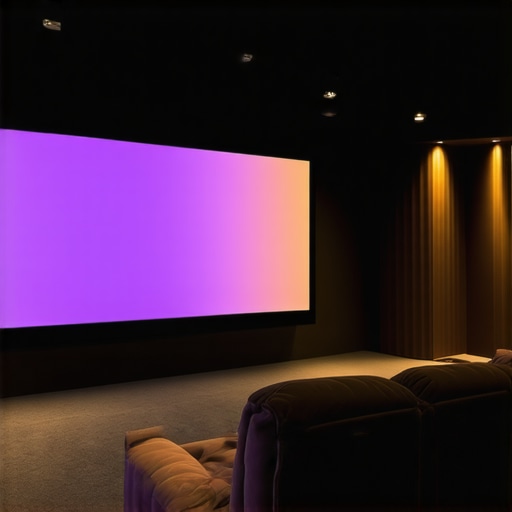
Elevate Your Home Theater with Expert-Level Insights
Leverage Contrast for Maximum Impact
Strategically placing bias lights can dramatically improve perceived contrast, making images more vivid and reducing eye fatigue during extended viewing sessions. By customizing lighting placement and color temperature, you optimize visual depth, immersing yourself deeper into cinematic experiences.
Embrace Precision Calibration for Consistency
Fine-tuning LED brightness, color rendering, and placement ensures consistent ambient conditions that complement your display and content type. Precise calibration avoids visual distractions, maintaining a seamless cinematic atmosphere that adapts to genre-specific moods.
Utilize Adaptive Technologies to Respond in Real-Time
Smart lighting systems that adjust in response to on-screen action offer a dynamic viewing environment. Incorporating sensors and automation, these setups mimic professional projection environments, elevating immersion to a new professional standard.
Select High-Quality Components for Longevity
Invest in high-CRI LED strips and premium power supplies to guarantee longevity and color fidelity. Quality lighting not only enhances visual performance but also reduces maintenance needs, ensuring your cinematic sanctuary remains pristine over time.
Integrate Seamlessly with Content Ecosystems
Compatibility with media servers and control platforms enables synchronization between lighting and audiovisual components. This integration fosters a cohesive environment where lighting reacts intuitively to content, enriching the cinematic experience.
Resources Curated for the Aficionado
- Lighting Design Lab White Papers: In-depth, research-backed insights on spectral quality and color reproduction that inform expert decisions.
- Home Cinema Essentials Guides: Comprehensive resources offering advanced bias lighting techniques and installation tips tailored for serious enthusiasts.
- Industry Forums and Communities: Interactive platforms where professionals share innovative solutions and troubleshoot complex installations.
A Perspective from the Pinnacle of Expertise
For those committed to transforming their home cinema into a professional-grade environment, mastering the nuanced deployment of bias lights and LED strips is paramount. These advanced techniques elevate not just aesthetics but also contribute to perceptual accuracy, comfort, and immersion. Exploring dedicated resources like Lighting Design Lab’s white papers can deepen your understanding, fostering not just better setups but a profound appreciation for the science behind excellent lighting. Engage with industry experts and fellow enthusiasts through professional communities to exchange insights and push your system’s capabilities further. As you refine your setup, remember that high-quality components and intelligent automation are allies in achieving the ultimate cinematic atmosphere—one that feels truly immersive and forward-thinking.



Leave a Reply