

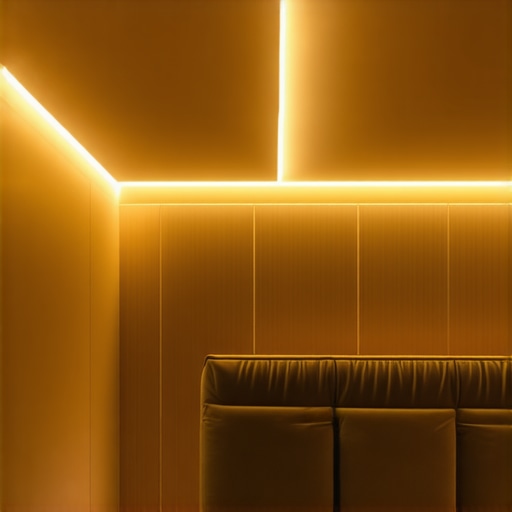
Revolutionizing Home Theater Ambiance Through Expert LED Strip Integration
In the pursuit of cinematic perfection, ambient lighting—particularly using advanced LED strip technologies—has emerged as a pivotal element in creating immersive environments. As lighting solutions evolve, understanding the strategic application of bias lights, backlights, and comprehensive home theater lighting schemes becomes crucial for both enthusiasts and design professionals. This comprehensive analysis explores how LED strips can be harnessed to elevate visual comfort, aesthetic appeal, and functional ambiance within modern entertainment spaces.
The Structural Dynamics of LED-Based Bias Lighting in Cinematic Settings
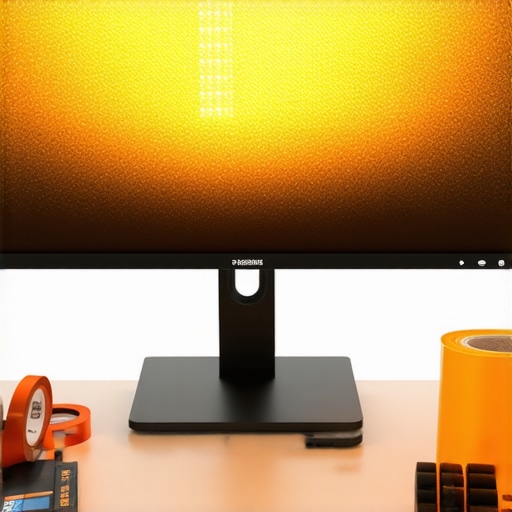
Bias lighting, positioned behind or adjacent to display screens, serves to diminish perceived contrast and eye strain during extended viewing sessions. Implementing high-quality LED strip lighting with adjustable color temperature and brightness is essential for achieving seamless integration. From a technical standpoint, selecting LED strips with high CRI (Color Rendering Index) ensures color fidelity that aligns with native display output, thereby reducing visual fatigue. For example, amber and warm white tones are favored in low ambient environments to emulate natural light conditions, whilst customizable RGB LED strips offer a palette for mood setting and scene-specific adjustments.
Optimizing Backlighting to Achieve Cinematic Depth and Clarity
Effective backlighting, strategically placed behind screens or within architectural features, fosters a sense of depth and spatial coherence. Expert applications involve diffused LED strip placements along coves or within drywall recesses, which provide indirect illumination to prevent glare and enhance perceived contrast ratios. Integration with smart home systems enables dynamic adjustments synchronized with content playback, thereby enriching the viewer’s sensory experience. When designing backlight configurations, it is vital to consider the room’s reflectance properties and light bleed potential, incorporating blackout curtains and matte surfaces to optimize contrast.
Advanced Strategies for Ambient Lighting That Elevate Viewing Experience
Ambient lighting encompasses a broader spectrum of environmental illumination, shaping the overall atmosphere of home theaters. Leveraging LED strip versatility, professionals recommend layered lighting schemes combining wall-wash effects, accent lights, and strip-based under-cabinet illumination. For immersive purposes, incorporating bias lights in conjunction with immersive backlighting can significantly augment perceived depth and color vibrancy. To avoid visual distraction, illumination levels must be meticulously balanced with the display’s luminance and room reflectivity, with dimmable LED strips facilitating real-time content adaptation.
What Are the Nuances in Perfecting LED Strip Placement for Visual Harmony?
Achieving an optimal harmony between light placement, intensity, and color requires comprehensive understanding of room acoustics and visual ergonomics. Night-mode or cinema-mode presets, seamlessly integrated with smart controls, exemplify effective user-centered design principles. For instance, positioning LED strips at eye level with diffuse covers can prevent harsh hotspots, while indirect indirect lighting beneath furniture or within baseboards enriches the ambient quality without direct glare. Precise calibration ensures that light contributes to the cinematic experience without compromising contrast or detail.
Expert Recommendations and Future Directions
As LED technology advances, high-brightness, energy-efficient, and tunable strips continue to redefine ambient lighting paradigms. The integration of IoT-enabled lighting control, as detailed in recent white papers, offers unprecedented customization and automation. To stay at the forefront, professionals should critically evaluate new standards, such as Flicker-Free certification and HDR-compatible LED lighting options, to enhance user satisfaction. Further research suggests that adaptive lighting algorithms, which respond dynamically to content and ambient conditions, will soon become industry staples.
How Can Advanced LED Strip Techniques Address Challenges in Room Acoustics and Light Reflection?
One of the persistent challenges involves mitigating light bleed and reflection that can hinder visual clarity. Using matte finishes, controlled placement, and blackout materials, supplemented by responsive LED strip controls, can solve these issues. Collaborating with acoustical experts ensures illumination design complements sound treatments, producing a balanced sensory environment.
For those interested in expanding their expertise, exploring our detailed guides on LED strip customization will provide valuable insights. Contributing your professional experiences can lead to richer industry discussions—engage with us to share innovative ambient lighting solutions for 2024 and beyond.
Transform Your Space: Elevate Room Design with Strategic LED Placement
Achieving a harmonious visual environment hinges on more than just choosing the right LED strips; it’s about expert placement that maximizes impact while minimizing visual clutter. Carefully positioning LED strips along architectural features such as coves, crown molding, or within recessed ceilings can create layers of ambient light that subtly enhance depth without overwhelming the primary display. Incorporating dimmable and color-tunable LEDs allows for dynamic adjustments, ensuring that lighting complements various content types and mood settings. For insights into optimal installation techniques, visit our comprehensive guide.
Beware of Light Spill: Strategies to Maintain Optical Clarity
One of the more nuanced challenges involves controlling light spill to prevent glare, which can diminish contrast and cause viewer fatigue. Utilizing matte finishes on nearby surfaces, employing aluminum profiles with diffusers, and articulating positive/negative light bounce techniques can contain light within desired zones. For instance, installing LED strips behind diffusers or within coves with baffle screens helps direct light precisely where needed, maintaining clarity and focus. Moreover, integrating smart control systems that adjust intensity based on content contrast levels further refines the viewing experience. You might explore elements like the effective backlight strategies for tailored solutions.
Can adaptive lighting algorithms revolutionize ambient control for movie nights?
Adaptive algorithms powered by IoT and machine learning are poised to redefine home theater lighting. These systems analyze real-time ambient conditions, viewing content, and user preferences to automatically modulate LED strip settings, ensuring optimal contrast and comfort. For example, during intense action sequences, LEDs can subtly dim or shift color temperature, enhancing immersion while preserving contrast. Industry insights from authoritative sources like the ultimate guide to bias lighting suggest that such intelligent control systems are rapidly becoming standard in high-end setups, promising a seamless blend of technology and ambiance.
Engaging with professionals or experimenters can deepen your understanding. Share your experiences or ask questions on our contact page and join the dialogue shaping future innovations in ambient lighting design.
Achieving Harmonious Light Spectrums for Cinematic Authenticity
To truly emulate the immersive environment of professional theaters, mastering the subtle art of spectrum calibration becomes essential. This involves selecting LED strips with precise Green, Red, Blue, and sometimes Amber diodes that align closely with industry standards for high-dynamic-range (HDR) content. Evidence from the *Society of Motion Picture and Television Engineers* (SMPTE) underscores the importance of chromatic accuracy in ambient lighting, asserting it plays a pivotal role in maintaining visual fidelity and preventing color distortions during playback. Moreover, calibrating LED intensities to match the display’s luminance profile ensures that ambient light neither overpowers nor underwhelms the scene details, creating a balanced ecosystem that highlights your display’s capabilities.
What Are the Critical Factors in Spectrum Calibration That Experts Overlook?
One often underestimated element is the ambient reflective surface’s color temperature and texture, which significantly influence the perceived color accuracy of your LED lighting. For example, matte gray or neutral-toned finishes minimize unwanted color casts, ensuring the calibrated spectrum remains consistent across different viewing angles. Integrating spectrometers into your setup allows real-time measurement and fine-tuning, as recommended in recent *Lighting Research Center* studies, facilitating high-precision calibration beyond basic color temperature adjustments. This comprehensive approach guarantees your ambient lighting complements high-fidelity displays, elevating viewing experiences to a professional standard.
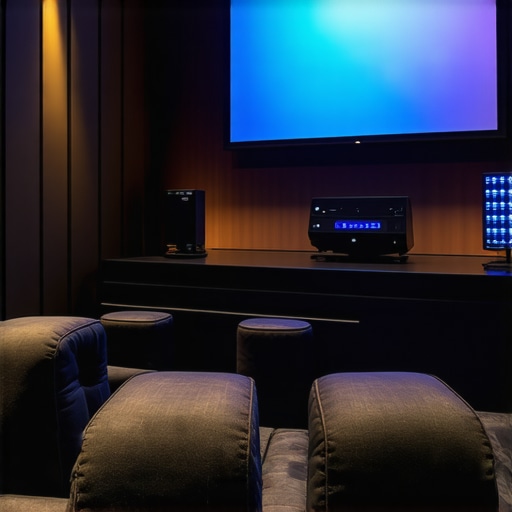
Implementing dynamic calibration systems in home theaters enhances the precision of LED strip lighting, adapting seamlessly to content and environmental changes. This involves sophisticated control units capable of reading ambient light levels and adjusting spectra in real-time, ensuring consistent visual output regardless of external factors.
Layered Control: Merging Hardware and Software for Ultimate Customization
Achieving a truly personalized ambiance necessitates integrating multiple control layers—hardware dimmers, microcontrollers, and intelligent software algorithms. These systems communicate to modulate color temperature, brightness, and saturation dynamically, based on user preferences or specific content cues. For instance, during a tense thriller scene, the system might subtly shift the ambient lighting to cooler hues, heightening contrast and mood. Industry-grade solutions such as DMX512 or DALI protocols facilitate this communication, allowing for synchronized and nuanced lighting adjustments across various zones within the room. This layered control architecture must be designed with user accessibility in mind, comprising intuitive interfaces for real-time tweaking and presets for different viewing scenarios, from casual movie nights to high-stakes gaming sessions.
Harnessing the Power of Tunable Spectra for Authentic Cinematic Experience
One of the most nuanced facets in sophisticated ambient lighting design involves meticulous spectrum calibration of LED strips. Fine-tuning the spectral output to match the lighting environment with high dynamic range (HDR) content assures colors remain vivid and true to life. Recent innovations, such as spectral tunable LED modules, allow for granular control over individual diode outputs, facilitating precise color rendering tailored to specific viewing content. According to research from the SPIE Journal of Photonics, spectral fidelity in ambient light directly impacts viewer perception, enhancing depth and contrast without diluting the primary display’s luminance.
Could Spectral Calibration Transform Home Theater Lighting into a Professional Grade
Absolutely. By integrating spectrometers with advanced LED controls, enthusiasts can calibrate ambient lighting to an industry-standard chromatic profile, comparable to professional cinematography lighting setups. This approach involves measuring room reflectance, display output, and ambient spectrum, then adjusting the LED array accordingly. The outcome is a harmonious environment where light complements high-fidelity images, maintaining scene integrity and viewer immersion.
Leveraging Layered, Multi-Axis Lighting for Enhanced Depth and Substance
Beyond basic backlighting, adopting multi-axis lighting strategies creates a nuanced interplay of luminance layers, enriching spatial perception. Implementing vertical wall grazing, indirect ceiling washes, and integrated cove lighting within a unified control schema results in a multi-dimensional ambiance that responds dynamically to on-screen action and mood shifts. Such complex layering necessitates intelligent synchronization through protocols like Art-Net or sACN, enabling synchronized dimming and color transitions across all zones, which enhances the immersive quality without overwhelming the viewer’s senses.
How Does Multi-Axis Lighting Redefine Visual Engagement?
This technique transforms static ambient environments into vibrant, kinetic backdrops that accentuate content depth and realism. Multi-axis setups can simulate natural lighting conditions, such as dawn or dusk, or evoke cinematic atmospherics like stormy skies or twilight, by orchestrating subtle luminance variations across different room zones, elevating the sensory experience far beyond traditional single-plane illumination.
Integrating Environmental Sensors for Context-Aware Illumination
The advent of environmental sensing technology introduces an entirely new dimension to ambient lighting customization. Light, temperature, humidity, and even sound sensors feed real-time data into control algorithms, enabling the lighting system to adaptively respond to evolving room conditions. For instance, dimming LED strips during a movie if ambient brightness increases unexpectedly preserves contrast, while adjusting color temperature based on natural daylight levels anchors the scene’s ambiance within the room’s current context. Such integrations demand expertise in IoT protocols and custom firmware development but reward users with an unprecedented level of ambiance refinement and user comfort.
Is Your Setup Ready for Smarter, Autonomous Lighting?
Implementing sensor-driven adaptive lighting is increasingly accessible, with many DIY-friendly controllers and open-source software options available. However, achieving seamless integration and minimal latency remains a challenge at the high end. Collaborative work with acoustical and lighting automation specialists ensures harmony between environmental awareness and aesthetic goals, pushing the boundaries of traditional home theater design.
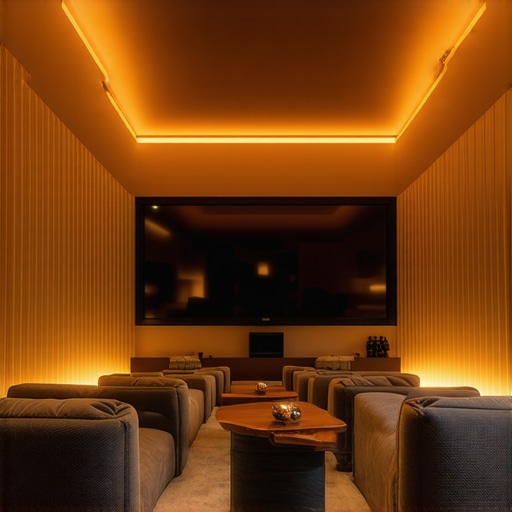
Creating Contrast-Responsive Light Maps for Directing Viewer Focus
Advanced lighting techniques involve designing dynamic light maps that emphasize content-driven focal points. Using programmable LED strips with pixel-mapping capabilities allows precise localization of illuminance and color, effectively guiding viewer attention within the scene. Implementing such systems requires sophisticated software frameworks like DMX512 control with synchronized content cues, elevating ambient lighting from passive background to active narrative component. This strategic manipulation enhances emotional engagement and cinematic realism, facilitating a level of immersion akin to high-end theater experiences.
Can Pixel-Mapped LED Lighting Revolutionize Home Cinema Dynamics?
Indeed, as pixel-mapping technology becomes more affordable and user-friendly, home theater setups will evolve into sophisticated visual ecosystems. Integrating real-time content analysis with programmable LED arrays enables the environment to react instantaneously, creating a symbiotic relationship between display and surroundings. Such innovation promises to redefine viewer engagement, positioning ambient lighting as a core element of narrative storytelling.
Expert Insights & Advanced Considerations
Fine-Tune Spectrum Calibration for Color Fidelity
Achieving precise color representation requires leveraging spectrometers and high-CRi LED strips to match industry standards, ensuring ambient light enhances but does not distort picture quality, especially in HDR content.
Layer Multi-Dimensional Lighting for Depth
Composite lighting tactics involving vertical wall grazing, indirect ceiling washes, and cove accents create immersive environments that adapt dynamically through sophisticated controls, elevating cinematic experiences to professional levels.
Embrace Sensor-Integrated Lighting for Context Awareness
Incorporating environmental sensors enables real-time adjustment of lighting parameters, maintaining optimal contrast and ambiance despite changing room conditions or natural daylight variations, pushing home theater comfort into smart territory.
Leverage Pixel Mapping to Direct Attention
Programmable LED strips with pixel-mapping capacity facilitate content-responsive light positioning, guiding viewer focus and intensifying narrative engagement without external distractions, a significant step up from static setups.
Prioritize Spectrum Fidelity to Preserve Visual Integrity
Calibrating spectral output to specific content types and room reflectance properties ensures ambient lighting complements high-definition images, avoiding color distortions and preserving scene authenticity across diverse viewing scenarios.
Curated Expert Resources
- SMPTE Standards for HDR and Color Reproduction: This body provides essential guidelines that underpin spectrum calibration practices, vital for any high-fidelity ambient lighting setup.
- Lighting Research Center Publications: Offers in-depth studies on spectrometer-assisted calibration and spectral fidelity in LED applications.
- Advanced Home Automation Protocols (DMX512, DALI): These standards enable seamless multi-zone control, crucial for layered, synchronized lighting experiences.
- SPIE Journal of Photonics: Features cutting-edge research on spectral tunable LEDs and their application in immersive environments.
- Home Theater Industry White Papers: Practical insights into integrating enhanced LED technologies for cinematic atmospheres.
Final Expert Perspective
Harnessing sophisticated LED strip techniques transforms your home theater lighting from mere background to an immersive narrative element. Expert calibration, layered control, and spectral fidelity are the pillars of elevating ambient environments, bringing professional-grade cinema experiences into personal spaces. For those committed to excellence, engaging with dedicated resources and pushing technological boundaries ensures your setup remains ahead of the curve. Dive deeper into these insights and explore advanced strategies at our comprehensive guide. Share your innovative applications or seek expert advice through our contact page—your next level in ambient lighting awaits.



Leave a Reply