

Elevating Cinema Experience Through Expert Lighting Strategies
In the realm of high-end home theater design, lighting transcends mere illumination, becoming a sophisticated tool for enhancing visual immersion and reducing eye strain. As an industry expert, I recognize that the integration of bias lighting, LED strip configurations, and ambient lighting is pivotal to crafting an authentic cinematic atmosphere that meets the demands of discerning enthusiasts.
Unveiling the Science Behind Bias Lighting and Its Impact on Perceived Contrast
Bias lights, positioned behind or around the display, serve to mitigate the disparity between the screen brightness and the surrounding environment. This technique not only enhances perceived contrast but also diminishes viewer fatigue, especially during prolonged viewing sessions. Research published in the Journal of Vision underscores the importance of this lighting modality in achieving a balanced visual field. Expert installations leverage high-quality LED strips with adjustable color temperatures, aligning with the ambient conditions for optimal comfort.
Designing Ambient Lighting for Cinematic Depth and Spatial Perception
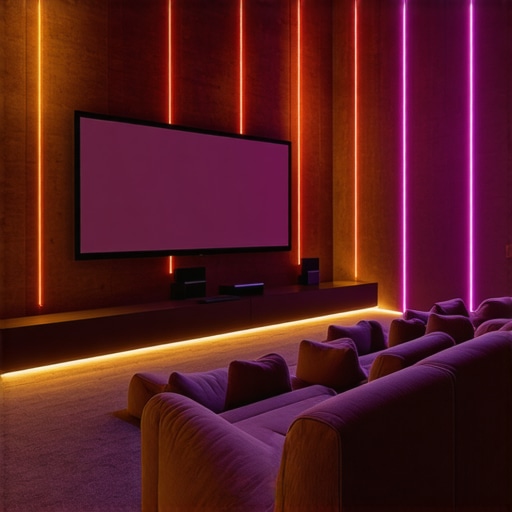
The strategic placement of LED strip lighting around the room’s perimeter creates a layered depth that accentuates spatial perception. This ambient lighting subtly guides the viewer’s gaze, framing the screen and preventing eye strain caused by stark contrasts. Advanced ambient lighting schemes employ dynamic color tuning and brightness modulation, synchronized with the content, to evoke emotional responses and heighten immersion.
Addressing Complex Inquiries: How Do I Achieve Seamless LED Strip Integration Without Visible Gaps?
Achieving seamless LED strip integration demands meticulous planning of channeling and diffusers. Experts recommend using high-density LED strips with consistent spacing, coupled with professional-grade diffusers that scatter light evenly, eliminating hotspots. Proper cable management and discreet mounting ensure a clean aesthetic. Additionally, selecting LED strips with high color rendering index (CRI) values guarantees color fidelity, crucial for accurate scene reproduction. For comprehensive guidance, consult our expert installation tips.
How Can Modern LED Technology Further Enhance Home Theater Customization?
Emerging innovations in LED technology, such as smart lighting systems with voice control and app integration, enable unprecedented levels of customization. They facilitate real-time scene-specific adjustments, creating tailored atmospheres for different genres or moods. The integration of addressable LED strips allows for complex light animations and color sequences, transforming your home theater into a dynamic visual environment. To explore these cutting-edge solutions, visit our comprehensive guide.
By embracing these sophisticated lighting techniques, you elevate your home theater from a standard setup to an immersive, professional-grade cinematic space. For further insights and tailored recommendations, do not hesitate to reach out through our contact page.
Push the Boundaries of Home Theater Lighting with Next-Gen Tech
As technology evolves, so do the possibilities for customizing your home theater ambiance. Beyond traditional LED strips and bias lighting, emerging innovations such as OLED-based ambient lighting panels and ultra-wide color gamut LED systems are transforming how enthusiasts craft immersive environments. These advancements allow for more precise color rendering, dynamic light effects, and seamless integration with smart home ecosystems, elevating your space from good to truly extraordinary.
How Do Advanced LED Systems Reframe the Concept of Room Atmosphere?
State-of-the-art LED solutions, including high-CRI (Color Rendering Index) strips and pixel-addressable lighting, offer granular control over color and brightness. This precision enables scene-specific lighting adjustments that can mimic natural lighting conditions or create dramatic effects synchronized with your content. For example, dynamic backlighting that responds to on-screen colors can enhance perceived contrast and depth, making every movie feel more vivid and lifelike. To explore the latest options, check out our comprehensive guide.
Can Custom Light Programming Unlock Hidden Dimensions of Your Home Theater?
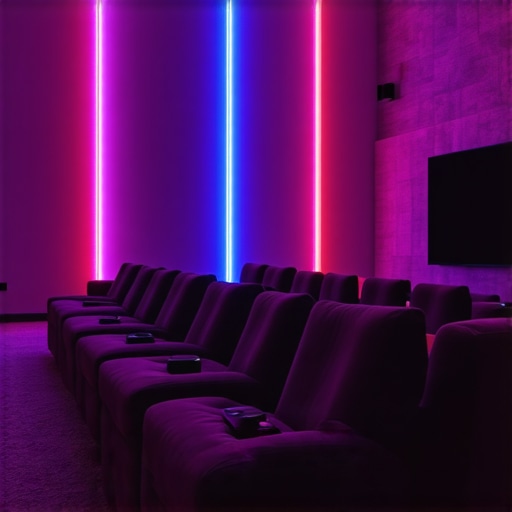
Absolutely. Custom programming of LED strips, using software platforms compatible with smart lighting systems, enables you to design intricate light shows and mood transitions tailored to your viewing habits. This level of control not only heightens immersion but also allows for creative expression within your space. When paired with voice control or automation routines, these systems become intuitive tools for enhancing your cinematic experience. For expert insights on implementation, visit our expert lighting tips.
If you’re eager to push your setup further, consider integrating ambient lighting with other smart home devices for synchronized effects that respond to music, weather, or even your mood. Share your ideas or ask questions in the comments to start a conversation about creating your personalized cinematic sanctuary.
Harnessing the Power of Dynamic Lighting for Cinematic Authenticity
In high-end home theater installations, static lighting is no longer sufficient to evoke the immersive quality of commercial cinemas. Instead, dynamic lighting systems that adapt in real-time to on-screen content are revolutionizing viewer engagement. Technologies like pixel-mapped LED arrays and sophisticated software algorithms enable precise synchronization of ambient light with the video, creating a seamless visual environment that enhances contrast, depth, and emotional impact.
For instance, consider how Dolby Vision and HDR content can be complemented with adaptive backlighting that responds to scene luminance levels. This synergy not only boosts perceived contrast but also reduces eye strain by maintaining a balanced visual field. Implementing such systems requires understanding the nuances of color matching, latency minimization, and content-specific calibration—skills that only expert installers master.
Innovative Techniques to Minimize Light Spill and Achieve Perfect Seamlessness
One of the persistent challenges in ambient lighting design involves preventing unwanted light spill which can diminish contrast and introduce glare. Advanced solutions include the use of micro-structured diffusers, custom-cut channel housings, and high-density LED strips with integrated light-scattering optics. These components work together to produce uniform illumination without hotspots or visible seams, even in complex room geometries.
Moreover, employing intelligent cable management and concealed wiring techniques ensures that the aesthetic integrity of your setup remains pristine. When planning for seamless LED integration, consider the role of software calibration tools that allow for pixel-level adjustments, ensuring color consistency across different sections of the installation.
What Are the Best Practices for Achieving Ultra-Realistic Color Fidelity in Ambient Lighting?
Color fidelity is crucial for maintaining scene authenticity and avoiding color shifts that can distract viewers. Experts recommend selecting LED strips with high CRI (Color Rendering Index) ratings—ideally above 95—to accurately reproduce the colors seen on the screen. Combining this with meticulous calibration using professional-grade light meters and calibration software guarantees that ambient lighting complements the display without overpowering it.
Additionally, integrating color temperature tunability—ranging from warm whites (~2700K) to cool whites (~6500K)—allows for environmental adjustments aligned with different content genres. This flexibility enhances the overall cinematic atmosphere and ensures that every viewing session feels natural and engaging.
Deep Dive into Smart Lighting Ecosystems and Future Innovations
Emerging advancements in smart lighting are pushing the boundaries of customization. Systems like Philips Hue, LIFX, and custom addressable LED solutions now support complex scripting, voice control, and integration with home automation platforms such as Control4 or Crestron. This interoperability enables users to craft intricate scene transitions, synchronized with sound systems, or even ambient lighting that reacts to weather patterns or time of day.
Looking ahead, the development of AI-driven lighting algorithms promises to deliver predictive adjustments based on user preferences and real-time analytics. Imagine a home theater where the lighting system intuitively adapts to your mood and viewing habits, providing an unparalleled level of personalization. Staying informed about these innovations is essential for enthusiasts aiming to future-proof their setups.
How Can Integrating AI and Machine Learning Elevate Your Home Theater Lighting?
By leveraging AI and machine learning, advanced lighting systems can analyze viewing patterns, ambient conditions, and user feedback to optimize lighting scenes automatically. For example, a machine learning model could learn your preferred brightness and color schemes for different genres and adjust accordingly without manual intervention. Such systems also facilitate continuous calibration, ensuring consistent performance over time.
If you’re interested in exploring these cutting-edge solutions, consult specialized integrators who can tailor AI-driven lighting ecosystems to your unique space. This approach not only enhances immersion but also simplifies operation, making your home theater truly intelligent.
Mastering the Art of Ambient Light Synchronization for Flawless Visual Harmony
Achieving perfect harmony between your display and ambient lighting requires meticulous calibration of color temperature, intensity, and timing. Advanced systems utilize real-time content analysis, leveraging high-speed microcontrollers and sophisticated software algorithms to dynamically adjust lighting parameters. This precision ensures that each scene’s luminance and color palette are complemented by ambient light, creating an immersive experience that rivals commercial cinemas. For detailed calibration techniques, consult industry-leading sources such as CinemaQuest’s expert guides.
Unveiling the Potential of Adaptive Lighting Zones in Multi-Use Spaces
Modern home theaters often serve multiple functions, from gaming to movie nights and even work sessions. Implementing adaptive lighting zones allows each activity to have tailored lighting profiles, enhancing comfort and reducing visual fatigue. Using zone-specific LED controllers and programmable scenes, you can effortlessly switch between a cinematic glow and a bright workspace ambiance. This flexibility elevates your room’s functionality and aesthetic appeal, making it a true multi-purpose sanctuary.
Can Advanced Light Management Systems Elevate Your Cinematic Setting?
Absolutely. Integrating intelligent lighting management systems enables seamless control over multiple zones, scenes, and effects through centralized interfaces or voice commands. These systems support complex scheduling, scene recall, and even AI-driven adjustments based on user preferences. Such sophistication transforms your home theater into a highly personalized environment, adaptable to any mood or occasion. Explore more about these innovations at Smart Home Lighting Experts.
Harnessing the Power of Pixel-Perfect Light Mapping for Cinematic Realism
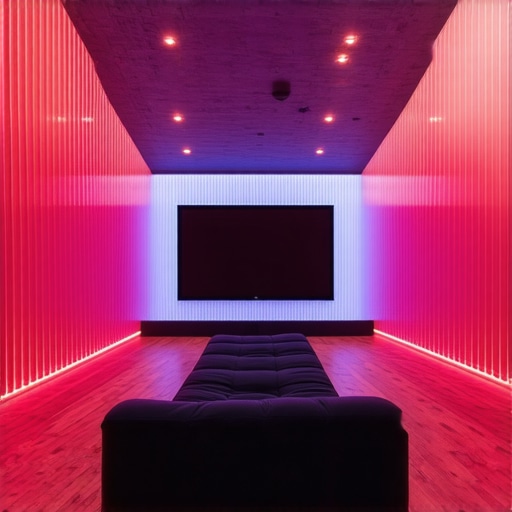
Pixel-mapped lighting systems enable precise control over individual LEDs, facilitating intricate light animations and scene-specific effects that synchronize flawlessly with on-screen content. This technology involves high-resolution LED arrays and specialized software capable of mapping visual data onto room lighting, effectively extending the visual palette beyond the display. Such setups are particularly effective in recreating natural lighting phenomena like sunsets or stormy skies, adding a new dimension of realism to your viewing experience. For insights into implementation, review the comprehensive tutorials available at Lighting Tech Resources.
Is Your Room Ready for Ultra-Precise Light Integration?
To achieve seamless pixel-level control, your space must be equipped with high-density LED strips, minimal latency hardware, and calibration software capable of fine-tuning color consistency. Proper room dimensions and mounting techniques also play a crucial role in preventing light bleed and ensuring uniformity. When executed correctly, this technology elevates your home theater to a level where the boundaries between digital and physical environments blur, immersing viewers in a hyper-realistic realm.
Stay ahead by exploring emerging innovations like AI-driven adaptive lighting and cloud-connected control systems that continuously optimize performance based on real-time data, as discussed in Tech Insights.
Elevate Your Space with Precision Lighting Techniques
As a seasoned professional in home theater design, I can affirm that expert lighting integration transforms the viewing experience. Incorporating bias lighting, high-quality LED configurations, and ambient lighting schemes not only enhances visual clarity but also creates an immersive environment that rivals commercial cinemas.
Leverage the Power of Bias Lighting for Enhanced Contrast
Properly positioned bias lights behind your display mitigate eye strain and boost perceived contrast. Using adjustable, high-CRI LED strips ensures color accuracy and seamless integration with your room’s aesthetics. This subtle yet effective technique is a cornerstone of professional-grade home theater setups.
Strategic Ambient Lighting to Enrich Depth Perception
Ambient lighting placed thoughtfully around the room adds layers of depth, guiding the viewer’s gaze and reducing stark contrasts that cause fatigue. Dynamic color tuning and content-synchronized brightness modulation can evoke emotional responses and heighten immersion, elevating your cinematic experience to new heights.
Achieving Seamless LED Strip Integration
Expert advice emphasizes meticulous planning: high-density LED strips, professional diffusers, and concealed wiring craft a flawless, gap-free installation. Prioritizing high CRI ratings ensures color fidelity, essential for authentic scene reproduction. For comprehensive guidance, consult our expert installation tips.
Harnessing Cutting-Edge LED Technology for Customization
Emerging innovations like smart lighting systems, voice controls, and addressable LED strips enable real-time scene-specific adjustments. These tools facilitate complex light animations, transforming your space into a dynamic visual environment. Explore our comprehensive guide to stay ahead.
Expert Resources to Deepen Your Knowledge
- Lighting Tech Resources: Offers in-depth tutorials on pixel mapping and advanced LED configurations.
- CinemaQuest Blog: Industry-leading insights on calibration and ambient light synchronization techniques.
- Smart Home Lighting Experts: Specializes in integrating AI-driven lighting ecosystems for immersive control.
Final Reflection from an Authority in Home Theater Lighting
Mastering home theater lighting involves understanding the nuanced interplay of bias lighting, ambient schemes, and innovative LED technologies. These expert insights and resources provide the foundation for creating an authentic, professionally crafted cinematic space. Engage with advanced tools, stay informed about emerging innovations, and don’t hesitate to consult specialists for tailored solutions. Elevate your home theater by embracing these expert strategies—your immersive experience awaits.



Leave a Reply