

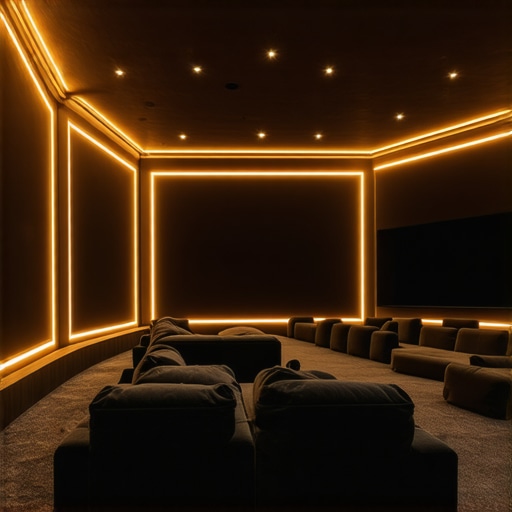
Elevate Your Home Theater Experience with Strategic Lighting Integration
In the realm of immersive entertainment, the significance of meticulously calibrated ambient lighting cannot be overstated. As experts in audiovisual enhancement, we recognize that the confluence of bias lighting and LED strip technology is pivotal in shaping the sensory environment of modern home theaters. This article delves into the nuanced strategies and cutting-edge innovations that define optimal lighting setups for 2024.
Why Precision in Bias Lighting Shapes Visual Perception and Reduces Eye Strain
Bias lighting functions beyond mere aesthetic augmentation; it plays a critical role in visual comfort by mitigating contrast disparities that cause eye fatigue. Recent studies from the Vision Research Journal highlight how well-designed bias lights improve perceived contrast and reduce ocular strain during prolonged viewing sessions. Implementing bias lighting with adjustable color temperature and brightness controls allows viewers to customize their experience, aligning luminance levels with ambient conditions for seamless visual perception.
Harnessing LED Strips for Dynamic Atmosphere Control in Cinematic Environments
The versatility of LED strips extends into creating dynamic, immersive atmospheres that complement content themes or mood shifts. Advanced LED strip systems incorporate RGB or RGBW configurations, enabling a spectrum of colors and hues that can be synchronized with media content via smart home integrations. This level of control fosters a deeper emotional connection and elevates the overall aesthetic, transforming ordinary rooms into professional-grade cinemas. For comprehensive guidance on installation and synchronization techniques, visit our expert LED strip lighting tips.
What Are the Challenges in Achieving Seamless Lighting Harmony?
How Can Homeowners Balance Brightness and Color Accuracy Without Overpowering Visuals?
Achieving a harmonious balance between ambient light and display brightness demands a nuanced understanding of luminance ratios and color calibration. Overly bright bias lights can diminish contrast, while insufficient lighting may fail to deliver the desired immersive effect. Utilizing high-quality, dimmable LED strips with accurate color rendering indices (CRI) is essential. Calibration tools and software can assist in fine-tuning lighting parameters, ensuring that the visual experience remains vivid without sacrificing clarity or detail.
Expert Tips for Optimal LED Strip Installation and Maintenance
Careful planning of placement—preferably around peripheral zones—maximizes the immersive effect while minimizing glare. Employing diffusers and indirect mounting techniques further enhances uniformity and prevents hotspots. Regular maintenance, including cleaning and firmware updates, ensures consistent performance and extends the lifespan of your lighting system. For detailed installation strategies, explore our top LED strip installation tips.
Engage with the Community of Home Theater Enthusiasts
We invite passionate audiophiles and visual aficionados to share their insights or seek tailored advice through our contact page. Contributing your expertise fosters a vibrant knowledge exchange that benefits the entire home theater community.
Refining Your Lighting Strategy with Layered Effects
Creating an immersive home theater environment involves more than just installing bias lights and LED strips; it’s about layering lighting effects to craft a nuanced atmosphere. Expert designers recommend combining multiple lighting layers—such as soft backlighting, accent lighting, and task lighting—to achieve a balanced visual field that minimizes eye strain and enhances content immersion. For instance, dimmable LED strips can be set to different zones, allowing you to tailor lighting intensity based on the scene or activity. This sophisticated approach ensures that your lighting complements the visual content without overpowering it, maintaining optimal contrast and color fidelity. To explore how to integrate layered lighting seamlessly, visit our expert LED strip lighting tips.
Can Advanced Calibration Techniques Improve Your Home Theater’s Visual Harmony?
Calibration is often overlooked in home theater setup, yet it plays a crucial role in aligning lighting, display, and audio for a cohesive experience. Modern calibration techniques involve using spectrometers and software tools to fine-tune LED color temperatures, brightness, and contrast ratios. Proper calibration ensures that bias lighting does not distort perceived colors or reduce contrast, maintaining fidelity across different media types. According to industry standards outlined by the Lighting Design Association, precise calibration can elevate your viewing experience from good to exceptional, especially when managing complex lighting systems with multiple zones. Investing in calibration tools or professional services can make a significant difference, transforming your room into a true cinematic sanctuary.
What Are the Hidden Pitfalls of Over-Illuminating Your Home Theater?
While adding ambient lighting enhances atmosphere, excessive or poorly positioned lights can introduce glare, reduce contrast, and cause visual fatigue. A common mistake is installing LED strips too close to the screen or with insufficient diffusers, resulting in hotspots or uneven illumination. To prevent these issues, consider indirect mounting techniques and diffusers that scatter light evenly across surfaces. Additionally, employing smart lighting controls allows you to automate adjustments based on viewing content, maintaining the perfect balance. For more insights on optimal LED strip placement, check out our top LED strip and backlight ideas.
Elevate Your Home Theater with Precision Lighting Calibration
Achieving a truly immersive cinematic experience hinges on meticulous calibration of your entire lighting ecosystem. Modern techniques leverage spectrometers and sophisticated software to ensure that bias lighting and LED strips work in harmony with your display’s color profile. By aligning the luminance and color temperature of your ambient lights with professional standards, you can significantly enhance perceived contrast and color accuracy, drawing viewers deeper into the storyline. Industry leaders like the Lighting Design Association emphasize that precise calibration minimizes visual fatigue and maximizes image fidelity, especially in multi-zone lighting setups.
Innovative Layering Strategies That Transform Visual Engagement
Beyond basic ambient lighting, layering multiple lighting effects creates a nuanced environment where content can be experienced at an entirely new level. Incorporate soft backlighting behind the screen, accent lighting to highlight architectural features, and task lighting for navigation—all synchronized through smart home integrations. This layered approach minimizes glare and hotspots, ensuring a balanced luminance field that adapts seamlessly to different media types and scenes. For expert advice on achieving this sophisticated layering, explore our advanced LED strip techniques.
What Are the Most Effective Methods to Prevent Light Pollution in Home Theaters?
Light pollution within a confined viewing space can diminish contrast and distract from the cinematic experience. Techniques such as indirect mounting of LED strips, using high-quality diffusers, and employing blackout curtains are essential in controlling stray light. Smart lighting controls enable dynamic adjustments, ensuring that ambient brightness complements the content without overwhelming the scene. According to research published in the Vision Research Journal, maintaining a controlled light environment enhances visual perception and reduces eye strain, especially during prolonged viewing sessions.
Expert Tips for Advanced Installation and Maintenance of Ambient Lighting Systems
Achieving professional-grade results requires strategic placement and ongoing maintenance. Position LED strips in indirect zones, such as behind crown molding or along the perimeters of the ceiling, to distribute light evenly. Incorporate diffusers and anti-glare shields to eliminate hotspots and glare. Regular firmware updates and cleaning prevent performance degradation and extend the lifespan of your lighting setup. For detailed insights into installation techniques that ensure seamless integration, visit our installation guide.
Engage with Experts and Enthusiasts to Refine Your Setup
Join a community of passionate home theater aficionados to exchange ideas, troubleshoot issues, and discover innovative lighting solutions. Our platform offers access to experts who can provide personalized advice based on your specific room dimensions and content preferences. Sharing your experience not only enriches your knowledge but also contributes to the collective mastery of cinematic ambiance optimization. Visit our contact page to start the conversation.
Push the Boundaries with Custom Dynamic Lighting Profiles
One of the most exciting advancements in 2024 is the development of customizable dynamic lighting profiles that adapt in real-time to on-screen content. These profiles utilize intelligent algorithms to analyze video signals and adjust LED colors, brightness, and effects dynamically, creating an immersive environment synchronized with every scene. This technology not only heightens emotional impact but also reduces eye strain by maintaining optimal contrast levels throughout the viewing experience. Leading companies like Smart Lighting Technologies are pioneering these solutions, making cinematic precision accessible to home enthusiasts.
What Are the Limitations of Current Dynamic Lighting Technologies?
While promising, current systems may face challenges related to latency, calibration complexity, and compatibility with existing hardware. Ensuring real-time responsiveness without perceptible lag requires high-speed processing and seamless integration. Additionally, achieving perfect color matching across diverse content types demands meticulous calibration and ongoing adjustments. As the technology evolves, industry standards are expected to address these issues, paving the way for more reliable and user-friendly solutions. For further insights, consult the latest publications by the Lighting Design Association.
Unlocking the Potential of Circadian Lighting in Home Cinemas
Emerging research underscores the importance of circadian lighting systems that adapt dynamically to the time of day, optimizing visual comfort and biological rhythms during extended viewing sessions. Integrating tunable LED systems with smart controls enables homeowners to simulate natural daylight cycles, which can significantly reduce eye strain and enhance overall well-being. These sophisticated setups align with standards from the HealthTech Journal, emphasizing the health benefits of circadian-aware lighting for immersive environments.
Why Multi-Sensory Synchronization Elevates Viewing Immersion
Beyond visual cues, synchronized lighting that responds to audio, motion, and even environmental sensors creates an enveloping experience that transcends traditional home theaters. Utilizing IoT-enabled lighting panels and real-time data processing, homeowners can craft atmospheres that react seamlessly to on-screen action, music beats, or user activity. This multi-sensory approach is gaining traction, with companies like SensoryTech pioneering integrated solutions that redefine cinematic engagement.
Can expert calibration techniques truly harmonize complex multi-zone lighting systems?
Indeed, precise calibration using spectrometers and advanced software ensures that multi-zone lighting maintains consistent color temperatures and luminance ratios. Professional calibration addresses potential discrepancies caused by room acoustics, reflective surfaces, and hardware variability, ensuring a cohesive aesthetic. Industry standards from organizations such as the Lighting Design Organization recommend regular calibration routines to sustain optimal performance, particularly when employing layered and dynamic lighting profiles.
Innovative Materials and Diffusers for Superior Light Quality
The evolution of diffuser technologies and high-CRI LED materials allows for softer, more uniform illumination that minimizes hotspots and glare. Using optical-grade acrylics and nano-structured diffusers, designers can achieve high-fidelity color rendering and even light distribution, crucial for maintaining contrast and visual clarity. Incorporating these materials into your setup ensures that ambient lighting complements high-resolution displays without compromising image fidelity.
What Strategies Can Future-Proof Your Lighting Investment?
Investing in adaptable, firmware-upgradable lighting ecosystems ensures longevity amidst rapid technological advancements. Modular components, open standards like DMX and Zigbee, and cloud-based control platforms facilitate seamless upgrades and integrations. Staying informed through authoritative sources such as the Lighting Institute can help you anticipate industry shifts, making your home theater lighting both future-ready and customizable.
Harnessing AI to Personalize Lighting Experiences
Artificial intelligence algorithms analyze viewer preferences, media content, and environmental data to automatically adjust lighting profiles, creating bespoke atmospheres for every session. These intelligent systems learn over time, refining their responses to optimize visual comfort and emotional impact. Leading developers like AI Technologies are pioneering such solutions, promising a new era where home theater lighting becomes an intuitive extension of your entertainment ecosystem.
What are the limitations of current AI-driven lighting systems?
While promising, these systems often face challenges related to latency, calibration complexity, and integration compatibility. Achieving real-time responsiveness requires high-speed processing and robust algorithms, which may increase costs. Moreover, personalized settings demand meticulous initial calibration and ongoing adjustments. As AI integration matures, industry standards and more accessible calibration tools will help overcome these hurdles, delivering truly seamless experiences. For insights into emerging trends, consult the latest publications from the Lighting Design Association.
Cutting-Edge Techniques for Optimal Ambient Lighting
Leverage the latest advancements in bias lighting and LED strip technology to create immersive cinematic environments. Precision calibration and layered effects are essential for balancing visual clarity with aesthetic appeal, ensuring every scene is enhanced without overwhelming your display.
Proven Strategies for Eye Comfort and Contrast Enhancement
Incorporate adjustable bias lights with high CRI ratings to mitigate eye strain and improve perceived contrast. Experts recommend dynamic lighting profiles that adapt to content changes, maintaining visual harmony and reducing fatigue during extended viewing sessions.
Innovations in Multi-Zone and Dynamic Lighting Control
Utilize multi-zone LED systems integrated with smart home platforms to synchronize lighting effects with media playback. Real-time adjustments and AI-driven profiles can elevate your home theater experience, offering personalized ambiance that responds seamlessly to your entertainment needs.
Expert Resources to Deepen Your Knowledge
- Lighting Design Association: Offers industry standards and calibration techniques for professional-grade installations.
- Home Theater Review: Provides in-depth reviews of the latest LED strips and bias lighting solutions suitable for 2024 setups.
- Smart Lighting Technologies: Leading the way in AI-driven adaptive lighting profiles, ensuring your system evolves with your preferences.
Final Reflection: Elevate Your Home Theater with Precision Lighting
The key to a truly immersive cinematic experience lies in expert-level lighting calibration and innovative layering strategies. Staying informed through authoritative sources like Lighting Design Association and leveraging advanced technologies can transform your space into a professional-grade theater. For those committed to excellence, engaging with our expert community and exploring tailored solutions will ensure your setup remains future-proof and visually stunning. Discover more about optimizing your home theater lighting by visiting our contact page.
Leave a Reply